Does Medicare Cover CPAP Therapy for Sleep Apnea?
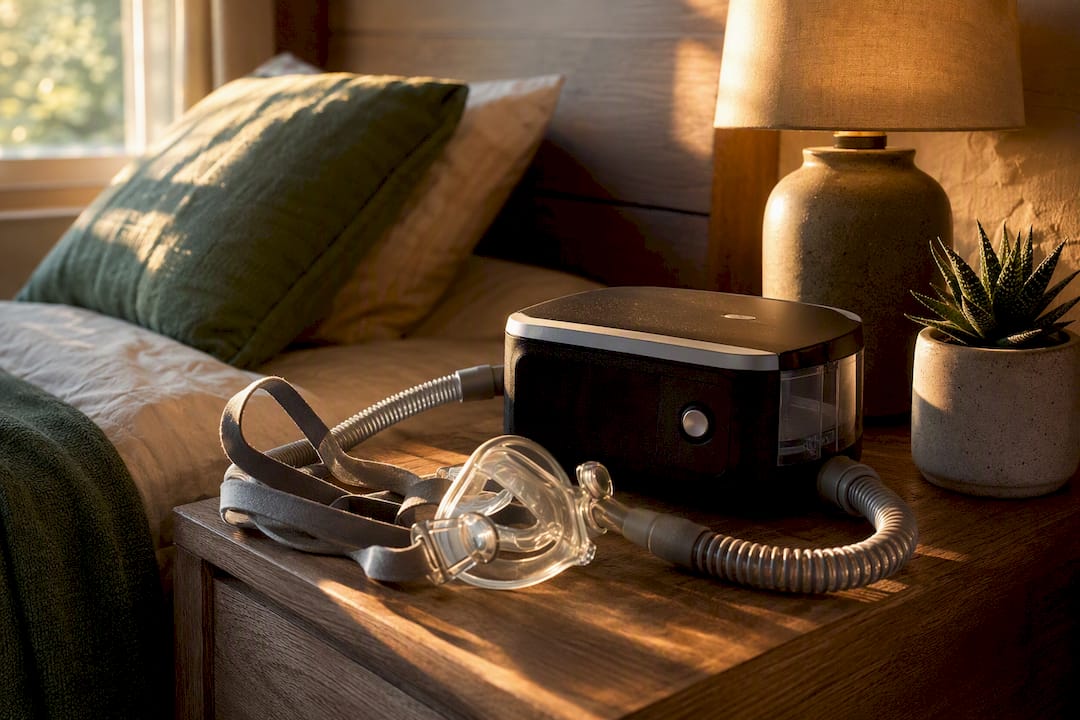
Yes. Original Medicare Part B covers CPAP therapy as durable medical equipment (DME) once you meet Medicare’s clinical and paperwork requirements. That coverage does not turn on automatically the day you get diagnosed. You need a qualifying sleep test, a physician’s order, a Medicare-enrolled supplier, and proof during a 12-week trial that the therapy is actually working for you.
Here is what has to line up before Medicare pays a claim:
- A sleep study showing you meet Medicare’s diagnostic thresholds for obstructive sleep apnea
- A written order from a Medicare-enrolled physician
- A supplier that’s enrolled in Medicare and willing to bill correctly
- Documented use and benefit during the first 12 weeks of therapy
- Continued adherence and follow-up documentation to keep coverage past month three
On cost, Medicare Part B applies its annual deductible before it pays anything. Once that’s met, you’re typically on the hook for 20% coinsurance of the Medicare-approved amount for the machine and supplies. That coinsurance is where a lot of beneficiaries get caught off guard, especially if their supplier doesn’t accept Medicare assignment.
Key Takeaways
Medicare Part B pays for CPAP therapy as durable medical equipment once a qualifying sleep test, physician order, and 12-week trial confirm both medical necessity and consistent use.
| Point | Details |
|---|---|
| Qualifying test matters | Your sleep study must meet NCD 240.4’s AHI/RDI thresholds and use an accepted test type (PSG or Type II/III/IV home test). |
| Trial leads to ownership | A 12-week trial with documented benefit leads into a 13-month continuous rental, after which you own the machine. |
| Coinsurance adds up | After the $283 Part B deductible, you typically pay 20% coinsurance, which Medigap plans commonly cover in full. |
| Billing details can sink coverage | Ask suppliers about Medicare assignment and confirm they apply the KX modifier correctly starting in month four. |
| Local guidance is available | Mountaintop Insurance offers free consultations to Central Oregon Medicare beneficiaries comparing Medigap and Advantage options for CPAP-related costs. |
Where to Verify Medicare’s CPAP Rules Directly
For the exact regulatory language behind everything covered here, go straight to the source. Medicare.gov’s CPAP coverage page explains beneficiary-facing rules on trials, rentals, and costs, while CMS’s National Coverage Determination and the PAP Policy Article (LCD) lay out the precise diagnostic and billing standards suppliers and physicians must follow.
This article is general information, not a substitute for advice from a qualified doctor. Consult a qualified healthcare professional about your own circumstances before acting on anything here.
Table of Contents
- What Does Medicare Cover for CPAP Therapy?
- What Sleep Test Results Qualify You for Coverage?
- How Long Is the CPAP Trial Before Medicare Pays Long-Term?
- How Much Does CPAP Cost With Medicare Coverage?
- How Do Suppliers Bill Medicare for CPAP Equipment?
- When Will Medicare Pay for Replacement CPAP Supplies?
- What Is the 4-Hour Rule for CPAP Compliance?
- How Do You Get Medicare to Approve CPAP Coverage?
- A Local Agent’s View on Medicare’s CPAP Rules
- Sources
- FAQ
What Does Medicare Cover for CPAP Therapy?
Medicare Part B is the part that pays for home CPAP use, and it treats the machine itself, the mask, tubing, and filters as separate billable items, not one bundled package. The distinction matters because each piece has its own reimbursement rules and its own replacement schedule.
The CPAP device itself bills under HCPCS code E0601. If your physician determines you need a bilevel device instead, because straight CPAP pressure isn’t tolerated or isn’t effective, that falls under E0470 or E0471 depending on whether it includes a backup breathing rate. These codes appear on your Medicare Summary Notice and can help clarify charges.
Beyond the device, Medicare covers:
- The CPAP or bilevel machine, paid as a rental initially, not a purchase
- Full face masks or nasal masks and cushions
- Tubing and headgear
- Disposable and non-disposable filters
- Humidifier chambers, when a humidifier is part of the prescribed setup
There’s an important split between Part A and Part B here. Part B is what covers CPAP for home use, which is the scenario almost every beneficiary with obstructive sleep apnea will deal with. Part A only enters the picture if you’re using a CPAP machine during an inpatient hospital stay, in which case the cost is wrapped into the hospital’s Part A billing rather than billed separately as DME. For the vast majority of people managing sleep apnea at home, Part A simply doesn’t apply to their CPAP equipment.
“Covered” in Medicare’s language does not mean Medicare buys you a machine outright on day one. Initially, it means Medicare pays a monthly rental fee to the supplier, and Part B DME coverage treats the equipment as a rented asset until ownership conditions are satisfied. Supplies like masks and tubing wear out faster than the machine, so Medicare’s replacement rules for those items work on a completely different clock, which we’ll get into later.
What Sleep Test Results Qualify You for Coverage?
Not every sleep study satisfies Medicare’s bar for medical necessity. The National Coverage Determination for CPAP therapy, NCD 240.4, spells out exactly which test types and results Medicare will accept, and skipping this step is one of the most common reasons claims get denied before therapy even starts.
-
Acceptable test types. Medicare accepts an attended, in-lab polysomnogram (PSG), or a qualifying home sleep test. Home tests must fall into Type II, Type III, or Type IV categories, and Type IV devices specifically need at least three channels of data (commonly airflow, effort, and oxygen saturation) to count. A basic pulse oximeter alone won’t cut it.
-
AHI/RDI thresholds. The NCD sets two paths to qualification. If your Apnea Hypopnea Index (AHI) or Respiratory Disturbance Index (RDI) is 15 or more events per hour, you qualify on severity alone. If your AHI or RDI falls between 5 and 14 events per hour, you still qualify, but only with documented symptoms or comorbidities on record. That includes excessive daytime sleepiness, impaired cognition, mood disorders, documented hypertension, ischemic heart disease, or a history of stroke.
-
Proper ordering and supervision. The test has to be ordered by a physician and interpreted by a qualified provider, with results actually placed in your medical record. A home test you bought online without a physician’s order, however accurate the device, generally will not satisfy Medicare’s documentation standard.
That middle tier, the 5 to 14 events per hour range, trips people up more than any other part of the criteria. If your sleep study lands in that band and your doctor didn’t document your daytime sleepiness or a related condition at the time, Medicare’s reviewers may not see enough justification, even if your AHI number is right there on the report. It’s worth asking your physician to be explicit about symptoms and comorbidities in your chart, not just the raw sleep study numbers, because CMS’s own decision memo treats unattended home testing as acceptable only when it meets these specific device and documentation standards.
How Long Is the CPAP Trial Before Medicare Pays Long-Term?
Medicare doesn’t hand you a machine and call it done. Coverage starts with a defined trial, moves into a longer rental phase, and eventually ends in outright ownership, and missing a step along the way can cost you the machine or the coverage.
- The 12-week trial. Medicare covers an initial 3-month trial period so you and your physician can determine whether CPAP therapy is actually helping. During this window, your usage gets tracked, and your physician needs to document that the therapy is providing clinical benefit.
- The re-evaluation window. Your physician’s follow-up assessment needs to happen between day 31 and day 91 of therapy, not before and not much after. This checkup is what confirms you’re using the device enough and getting enough benefit to justify Medicare continuing to pay.
- The 13-month rental period. If the trial shows adherence and benefit, Medicare continues paying monthly rental costs for a total of 13 continuous months. At the end of that 13-month stretch, ownership of the machine transfers to you. You stop paying rental coinsurance and the device is yours.
- What “continuous” actually means. The rental has to run without a break. If you stop using the machine, switch suppliers awkwardly, or your compliance data lapses long enough that the supplier halts billing, that clock can reset or stall entirely.
- The consequence of stopping early. If rental payments stop because you didn’t hit the compliance benchmarks, or because you and your supplier let paperwork lapse, you may be required to return the device, or you’ll need to pay for it and its supplies entirely out of pocket going forward.
Thirteen months feels like a long commitment when you’re two weeks into adjusting to a mask on your face every night. But that’s precisely why the early trial period matters so much: it’s your only real chance to work out fit issues, pressure settings, or humidity problems with your supplier before the meter starts running on a rental clock you don’t want to break.
How Much Does CPAP Cost With Medicare Coverage?
For 2026, the Medicare Part B deductible is $283. You pay that amount out of pocket before Medicare starts sharing costs on your CPAP equipment or any other Part B service. Once you’ve met the deductible, Medicare typically covers 80% of the approved amount, leaving you responsible for the remaining 20% coinsurance.
That 20% isn’t trivial when you’re renting a machine monthly plus paying for recurring mask and filter replacements. It’s one of the more common reasons beneficiaries end up shopping for supplemental coverage, and the options differ quite a bit:
- Medigap plans commonly cover that 20% coinsurance for Part B DME entirely, which means many Medigap policyholders pay close to nothing for CPAP equipment beyond their Part B deductible.
- Medicare Advantage plans vary widely. Some mirror Original Medicare’s cost-sharing structure, others use copays instead of coinsurance, and network rules can restrict which suppliers you’re allowed to use.
- Supplier assignment changes your bill dramatically. A participating supplier that accepts Medicare assignment agrees to the Medicare-approved amount as full payment. A supplier that doesn’t accept assignment can bill you more, and you’d be responsible for the difference.
Before you sign anything with a DME supplier, ask directly whether they’re Medicare-enrolled and whether they accept assignment. That single question determines whether your 20% coinsurance is calculated against a fixed, predictable Medicare rate or against whatever the supplier decides to charge.
How Do Suppliers Bill Medicare for CPAP Equipment?
The paperwork behind your CPAP claim is mostly invisible to you until something goes wrong, usually in the form of a denied claim around month four of therapy. Understanding a couple of pieces of billing jargon can save you that headache entirely.
First, confirm your supplier’s status. A “participating” Medicare supplier has agreed to accept Medicare’s approved amount as payment in full, which caps your coinsurance exposure. A supplier that doesn’t participate can charge more, and won’t always tell you that upfront.
Second is the KX modifier, a small billing code with outsized consequences. The LCD policy article for PAP therapy explains that suppliers must append the KX modifier to claims starting in month four of therapy to signal that they have documentation on file proving continued medical necessity, meaning your usage data and your physician’s re-evaluation are both in the record. Forgetting to append it is one of the most frequent, and most avoidable, reasons Medicare denies ongoing CPAP claims. The denial has nothing to do with whether you actually qualify. It’s purely a billing oversight, and it’s the supplier’s job to catch it, not yours, though you’re the one who suffers if they don’t.
A few HCPCS codes worth recognizing on your billing statements:
- E0601: standard CPAP device
- E0470: bilevel device without backup breathing rate
- E0471: bilevel device with backup breathing rate
- Separate codes for masks, tubing, and humidifier accessories, which will appear as individual line items rather than bundled into the device charge
Pro Tip: Call your supplier around month three and ask them directly, “Will you be appending the KX modifier to my claim, and do you have my physician’s re-evaluation on file?” If they hesitate or don’t know what you’re talking about, that’s a sign to switch suppliers before your coverage lapses.
When Will Medicare Pay for Replacement CPAP Supplies?
CPAP masks, tubing, and filters wear out on a completely different timeline than the machine itself, and Medicare treats them as separately reimbursable items rather than folding them into the device’s rental cost. You’re entitled to replacements at initial issue, and again once you meet ownership conditions and can document continued medical need.
General industry and supplier expectations for replacement frequency look roughly like this:
- Full face or nasal masks and cushions: replaced every 1 to 3 months, since the cushion material breaks down with nightly use and cleaning
- Tubing: replaced roughly every 3 months
- Disposable filters: replaced roughly every 2 weeks to monthly
- Non-disposable filters: replaced roughly every 6 months
- Humidifier chambers: replaced roughly every 6 months
Actual replacement intervals can shift depending on your specific Local Coverage Determination and how your individual supplier documents wear and medical need, so treat these as general expectations rather than fixed guarantees. Medicare’s policy language requires that replacement claims include documentation showing you still need the item and are still using your CPAP therapy as prescribed.
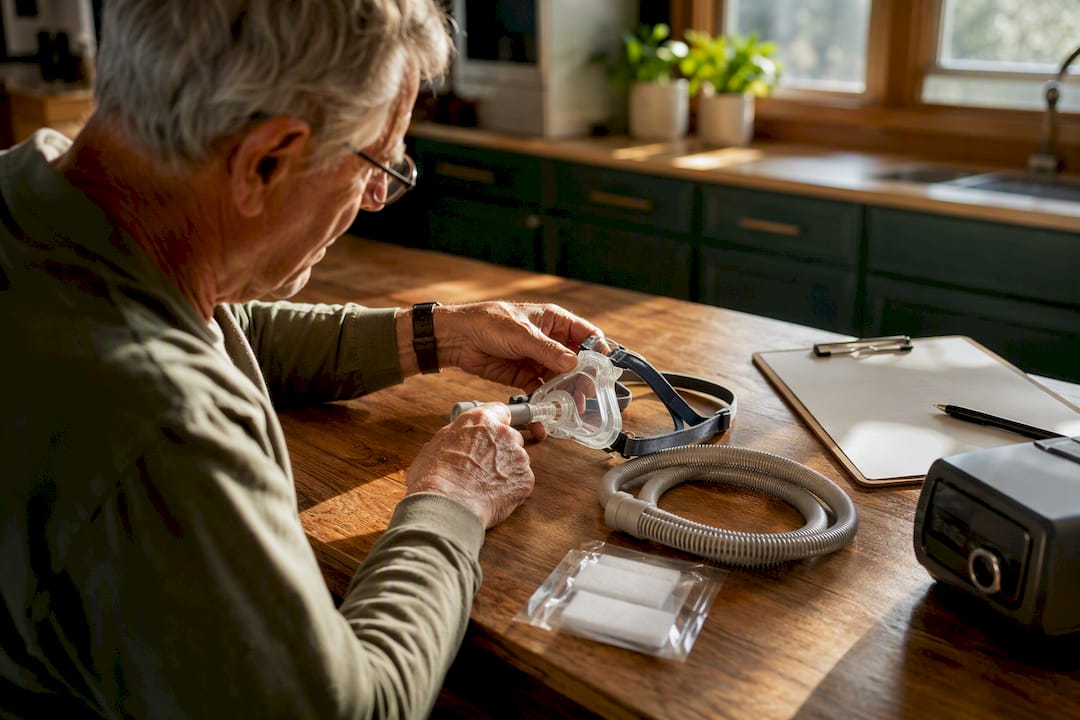
When you request a replacement, ask your supplier to keep a record showing the date of your last replacement for each item, confirmation that the item meets Medicare’s medical necessity standard for replacement, and your current usage compliance data if it’s requested. Keeping your own simple log of when you receive new masks or filters gives you a paper trail if a claim ever gets questioned. Suppliers handle hundreds of these requests and yours can slip through the cracks.
What Is the 4-Hour Rule for CPAP Compliance?
Medicare doesn’t just want to know that you own a CPAP machine. It wants proof you’re actually using it, and that proof hinges on a widely cited adherence benchmark.
-
The benchmark itself. The commonly applied standard is that you use your CPAP device for at least 4 hours per night on at least 70% of nights during a consecutive 30-day period, typically measured somewhere within the first three months of therapy. Confirm with your specific supplier exactly what threshold they’re reporting against, since documentation practices can vary.
-
How usage gets tracked. Modern CPAP machines log usage data internally, and most suppliers now use telemonitoring, meaning your machine transmits nightly usage data automatically to the supplier or a monitoring platform. This is the evidence that ends up supporting (or undermining) your continued coverage. It’s a more objective standard than the honor system doctors relied on decades ago, but it also means there’s no fudging a bad week.
-
What counts as acceptable documentation. Your medical record needs to show both the objective usage data from the device and your physician’s clinical assessment that the therapy is providing benefit, meaning improved symptoms, not just hours logged.
-
What to do if you’re flagged for low adherence. Talk to your physician and supplier immediately rather than letting the trial period lapse. Mask discomfort, pressure settings that feel wrong, or nasal congestion are common, fixable reasons for low usage, and your physician can adjust your prescription or refer you for a different mask style. Medicare’s requirement is about demonstrated benefit, not perfection, so early intervention on comfort issues often turns a failing compliance record into a passing one before the trial period closes.
How Do You Get Medicare to Approve CPAP Coverage?
Getting from diagnosis to a fully covered CPAP setup goes smoother when you follow the steps in order and ask the right questions before committing to a supplier.
- Get a qualifying sleep test. Confirm with your physician that the test type, in-lab PSG or an approved home sleep test, meets Medicare’s Type II, III, or IV standards.
- Obtain a physician’s order. The order needs to come from a Medicare-enrolled provider and clearly document your AHI/RDI results and any relevant symptoms.
- Choose a Medicare-enrolled supplier that accepts assignment. This single choice controls your out-of-pocket exposure more than almost anything else in the process.
- Start your 12-week trial and track your usage. Ask upfront how the supplier measures and reports compliance.
- Schedule your physician re-evaluation between day 31 and day 91 of therapy, since missing that window can delay or jeopardize continued coverage.
- Confirm the supplier files claims correctly, including the KX modifier starting in month four, and that your re-evaluation is documented in your medical record.
Before you sign with any supplier, ask them point blank: Are you Medicare-enrolled and do you accept assignment? What’s your return or repair policy if the mask doesn’t fit? How do you report compliance data, and will you tell me if I’m falling short of the threshold?
If a claim gets denied, don’t assume that’s the final word. Request your complete usage records and physician documentation, ask the supplier to confirm whether the KX modifier was properly applied, and request that Medicare reprocess the claim if a billing error is the culprit. The specific language in NCD 240.4 and the PAP policy article can support your case if you need to reference exact coverage criteria during an appeal.
Pro Tip: Keep copies of every sleep study report, physician order, and compliance summary in one folder from day one. If a claim gets denied months later, having that paperwork ready cuts weeks off the appeal process.
A Local Agent’s View on Medicare’s CPAP Rules
The part of this process that trips people up isn’t the sleep study or the physician’s order. It’s the gap between the 12-week trial and the 13-month rental, and specifically what happens to people whose coverage lapses somewhere in between because nobody explained the KX modifier to them in plain English. Medicare’s rules assume a level of coordination between physician, supplier, and beneficiary that, frankly, doesn’t always happen. The supplier who forgets to append a billing code shouldn’t be the reason a 70 year old loses access to a therapy that’s keeping their blood pressure and cardiac risk in check, but that’s exactly the failure mode we see most often.
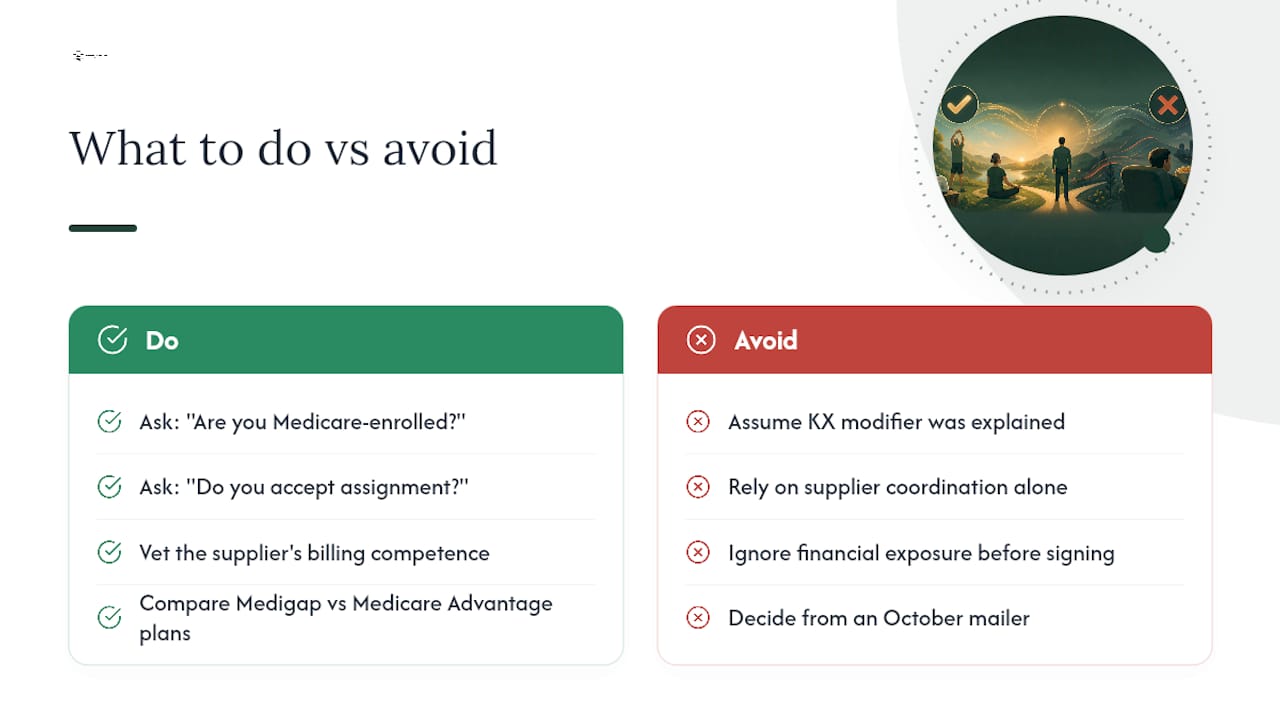
What gets underestimated is how much leverage a beneficiary has simply by asking two questions before they ever sign a supplier agreement: are you Medicare-enrolled, and do you accept assignment? Those two answers do more to control your financial exposure than any amount of research into HCPCS codes ever will. The coinsurance math is fixed once you know the supplier’s status. The variable people don’t control is whether the supplier’s billing office is competent, and that’s worth vetting the same way you’d vet a contractor before they start work on your house.
Medigap versus Medicare Advantage is the other decision that deserves more attention than it gets, because the difference in CPAP-related out-of-pocket costs between the two paths can be substantial depending on the specific plan, and that’s not a decision to make from a mailer you got in October.
— Jesse Zimmerman
Get Help Reviewing Your Medicare Coverage for CPAP Costs
Mountaintop Insurance is the local alternative to guessing your way through Medigap and Medicare Advantage brochures alone. We can’t diagnose sleep apnea or tell you which CPAP mask fits best. That’s your physician’s call. What we can do is make sure the insurance side of your CPAP therapy doesn’t cost you more than it should, or leave you exposed to a supplier that doesn’t play by Medicare’s billing rules. If you’re heading into a CPAP trial period or already juggling supplier paperwork, schedule a free consultation with our Medicare services team and bring your Medicare card, any sleep study paperwork you have, and a list of questions about your current or prospective supplier.
Sources
- Medicare
- Continuous Positive Airway Pressure (CPAP) Therapy for Obstructive Sleep Apnea (OSA) — CMS decision memo
FAQ
What kind of CPAP will Medicare pay for?
Medicare pays for a standard CPAP device (HCPCS code E0601) or, when your physician determines it’s medically necessary, a bilevel device (E0470 or E0471), as long as your sleep test and physician documentation meet Medicare’s criteria.
Will Medicare pay for a new CPAP machine after 5 years?
Medicare generally allows replacement of a CPAP machine after it’s fully owned and there’s documented medical necessity for a new device, though you’ll typically need updated physician documentation rather than an automatic replacement at a fixed year mark.
How do I get Medicare to pay for CPAP supplies?
Confirm your supplier is Medicare-enrolled and accepts assignment, then request replacement masks, tubing, and filters on the standard schedule while your supplier documents continued medical necessity for each claim.
What is the 4-hour rule for CPAP?
It’s the common adherence benchmark requiring CPAP use for at least 4 hours per night on at least 70% of nights during a consecutive 30-day period, usually tracked through your machine’s built-in usage data.
Can Mountaintop Insurance help me compare Medigap plans for CPAP coverage?
Yes. Mountaintop Insurance offers free consultations for Central Oregon residents to compare how different Medigap and Medicare Advantage plans handle CPAP coinsurance and supplier costs.
Recommended
Disclaimer: This article is for general educational purposes only and does not constitute personalized advice. Medicare rules and plan details change frequently.
Discuss Your Situation With Us