Dental Coverage With Medicare: What Seniors Need to Know

Original Medicare (Parts A and B) does not pay for routine dental care. No cleanings, no fillings, no dentures, no dental implants, and generally no extractions, unless that dental work is directly tied to a covered medical treatment such as organ transplant preparation or cancer treatment. If you want coverage for everyday dental needs, your next move is checking a Medicare Advantage plan or a standalone dental policy, or confirming whether your specific procedure counts as “medically necessary” under Medicare’s narrow rules.
- Original Medicare: no routine dental, limited medical exceptions
- Medicare Advantage: often includes dental, but benefits vary by plan and county
- Standalone dental plans and Medicaid: separate paths worth comparing before you enroll anywhere
Pro Tip: Before you assume you’re stuck paying cash, call your dentist’s office and ask them to check your Medicare Advantage plan’s dental network directly. Front-desk staff often catch coverage details that plan brochures gloss over.
Key Takeaways
Original Medicare excludes routine dental care by statute, so most beneficiaries need a Medicare Advantage plan, standalone dental policy, or Medicaid to get everyday coverage.
| Point | Details |
|---|---|
| Original Medicare excludes dental | Parts A and B don’t cover cleanings, fillings, dentures, or implants except in narrow medical-necessity cases. |
| Medical exceptions are narrow | Coverage applies only when dental work is inextricably linked to procedures like transplants or cancer treatment. |
| Medicare Advantage often includes dental | Benefits, annual maximums, and networks vary significantly by plan and county. |
| Watch annual maximums | A single major procedure can exhaust a plan’s yearly coverage cap in one visit. |
| Local guidance simplifies the choice | Mountaintop Insurance offers free consultations to compare Medicare Advantage dental benefits against standalone plans for Central Oregon residents. |
This article is general information, not a substitute for advice from a qualified financial advisor. Consult a qualified financial professional about your own circumstances before acting on anything here.
Table of Contents
- What Original Medicare Covers for Dental Care
- When Has Medicare Actually Paid for Dental Work?
- What Are Your Real Options for Dental Coverage?
- What Will Dental Care Actually Cost You?
- How Do You Compare and Enroll in Dental Coverage?
- A Local Agent’s Take on Dental Coverage Gaps
- Get Help Comparing Dental Coverage in Central Oregon
- Sources
- FAQ
What Original Medicare Covers for Dental Care
The exclusion isn’t a gray area. It’s written into federal law. Section 1862(a)(12) of the Social Security Act says Medicare won’t pay for services connected to the care, treatment, filling, removal, or replacement of teeth, with a short list of exceptions carved out over the years. CMS explains that Medicare can pay for dental services only when they’re “inextricably linked” to a medical procedure Medicare already covers.
That phrase does real work. It means the dental care has to be a necessary part of treating something else, not just convenient timing. A few concrete examples:
- Dental exams and treatment required before a heart valve replacement or valvuloplasty
- Tooth extractions needed before radiation therapy for head or neck cancer
- Dental clearance exams before an organ transplant
- Jaw reconstruction following an accident or traumatic injury, when it’s part of a covered surgical repair
Medicare’s own guidance is blunt about the boundary: dental services get covered only “when the dental service is an integral part of a covered procedure,” not because a dentist recommends it or because skipping the work might eventually cause a medical problem.
Setting matters here too. These exceptions typically apply whether the dental work happens in an inpatient hospital or during outpatient care tied to that same treatment plan, but the medical and dental providers usually need to coordinate closely for a claim to hold up.
Pro Tip: Ask your medical provider for a written referral or a copy of the treatment plan that names the dental work as a prerequisite. Adjusters look for that paper trail before approving a claim.
When Has Medicare Actually Paid for Dental Work?
Recent rule changes have expanded, slightly, the situations where Medicare will pay. KFF’s analysis of the 2023 through 2025 updates notes these clarifications cover pre-transplant exams, cardiac valve procedures, head and neck cancer treatment, and dialysis-related dental work for beneficiaries with end-stage renal disease. It’s worth being honest about scope: these changes help a relatively small slice of Medicare beneficiaries, not the general population needing a filling or a crown.
If you think your situation might qualify, documentation makes or breaks the claim:
- Get a written referral connecting the dental work to the medical treatment
- Have the treating physician’s office document the medical necessity, including infection risk if relevant
- Confirm the dentist is Medicare-enrolled or billing “incident to” a Medicare-enrolled physician
- Ask whether prior authorization applies before treatment starts, not after
- Pre-transplant dental clearance
- Cardiac valve replacement prep
- Head/neck cancer radiation prep
- ESRD/dialysis-related dental infection control
Pro Tip: Call the dental office and ask directly: “Are you Medicare-enrolled, and will this claim be billed as incident to my doctor’s covered procedure?” If they can’t answer clearly, get it in writing before you schedule anything.
What Are Your Real Options for Dental Coverage?
Since Original Medicare leaves routine dental uncovered, most beneficiaries end up choosing from five practical paths. Each works differently, and the right one depends on how much dental work you’re likely to need.
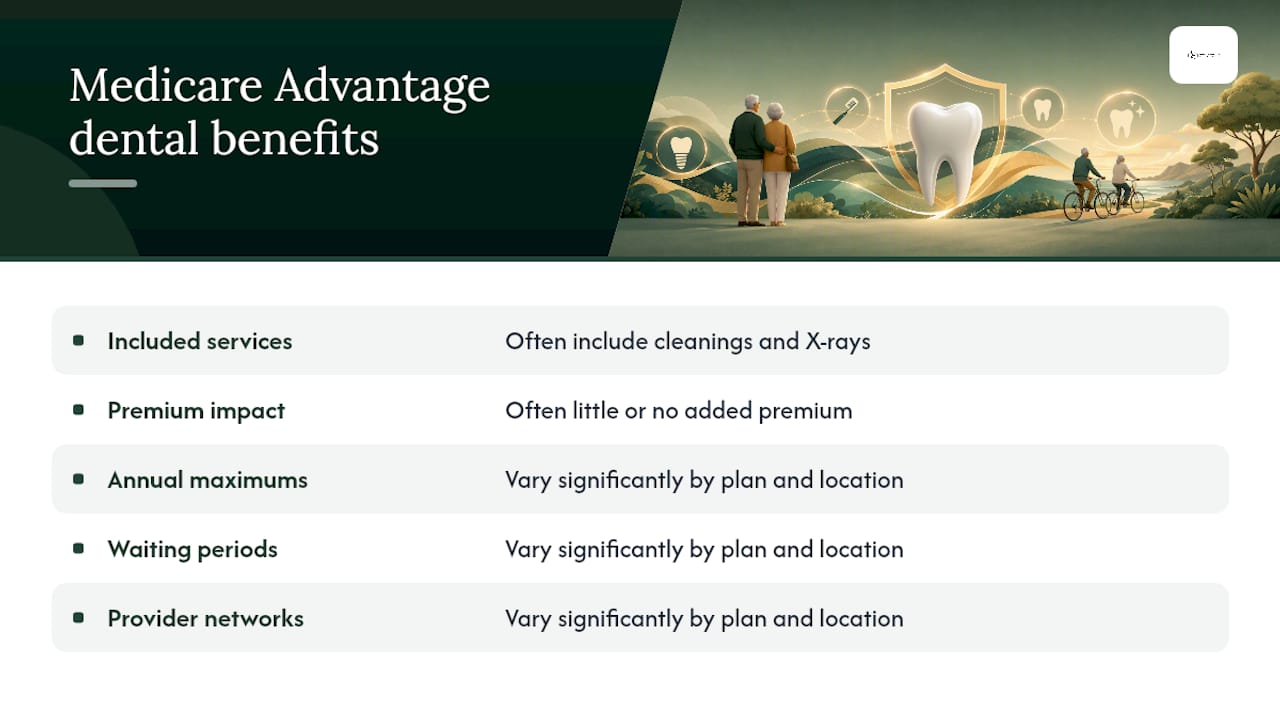
Medicare Advantage (Part C). Most Medicare Advantage plans now build in some dental benefit, according to U.S. News, often bundling cleanings and X-rays with the medical plan at little or no added premium. The catch is that “some dental benefit” varies enormously by plan and county. Annual maximums, waiting periods for major work, and provider networks vary significantly by plan and location.
They fit people already on Original Medicare plus a Medigap policy who still want dental protection.
Medicaid. For beneficiaries who qualify on income, Medicaid can cover dental care, but adult dental benefits are decided state by state. Some states cover comprehensive adult dental care; others limit it to emergencies only.
Retiree and employer plans. If you kept dental coverage through a former employer’s retiree benefits, that policy often outperforms anything you’d buy individually, both on price and coverage percentage.
PACE and D-SNP plans. Program of All-Inclusive Care for the Elderly and Dual-Eligible Special Needs Plans serve beneficiaries who qualify for both Medicare and Medicaid, and dental is frequently included as part of the broader benefit package.
Dental discount plans. These aren’t insurance. You pay an annual fee for a discount at participating dentists, which can work for people who mainly need preventive visits and want to avoid premiums entirely.
If you’re generally healthy and only need cleanings twice a year, a Medicare Advantage plan with dental or a discount plan probably covers you. If you’re likely to need a crown, bridge, or implant work soon, run the math on a standalone plan’s annual maximum before you commit.
Pro Tip: Read the waiting-period clause before anything else. Many standalone dental plans make you wait six to twelve months before covering major restorative work, which matters if you need that crown next month.
What Will Dental Care Actually Cost You?
Expect three or four moving pieces on any dental plan: a monthly premium, a deductible, copays or coinsurance on each procedure, and an annual coverage cap. Miss any one of those and your estimate will be wrong.
- Monthly premium: charged whether or not you use the plan
- Deductible: paid before coverage kicks in on non-preventive work
- Copay/coinsurance: your share of each procedure, often 20 to 50% on major work
- Annual maximum: the ceiling on what the plan pays in a calendar year, frequently $1,000 to $1,500 on many dental plans
A routine cleaning might run under $150 out of pocket if you have no coverage at all, while a single crown or root canal can run well past a plan’s entire annual maximum in one visit, according to cost patterns U.S. News outlines for consumers. That’s the trap: someone needing one major procedure can burn through a year’s coverage cap in a single appointment, then pay full price for anything else that comes up before January.
Pro Tip: Get a written pre-treatment estimate from your dentist’s billing office before any procedure over a few hundred dollars, and ask specifically whether your plan requires prior authorization for it.
How Do You Compare and Enroll in Dental Coverage?
Work through this in order, and you’ll avoid the most common mistakes people make when picking a plan under time pressure.
- List what you actually need: preventive-only, or likely restorative and major work
- Check whether your current dentist participates in the plan’s network
- Compare annual maximums and waiting periods side by side
- Add up total annual cost, premium plus expected out-of-pocket, not just the premium
- Confirm which procedures require prior authorization
- Enroll during your correct window, whether that’s Medicare’s Annual Election Period for Medicare Advantage plans or a standalone insurer’s open enrollment
Before signing anything, ask the insurer or dentist’s office: Is my dentist in-network? Is there a waiting period on crowns or implants? What percentage does the plan pay by tier? Does this procedure need prior authorization?
From there, Medicare Plan Finder is the fastest way to compare Medicare Advantage plans with dental in your area, your state Medicaid page will tell you if you qualify for dental benefits, and a local agent can walk you through comparing plans side by side.
A Local Agent’s Take on Dental Coverage Gaps
Most people calling Mountaintop Insurance about Medicare Advantage dental benefits already assumed Original Medicare covered at least cleanings. It doesn’t, and that gap catches people off guard right when they’re trying to lock in coverage.
- Free consultations comparing Medicare Advantage dental benefits against standalone plans
- Enrollment assistance and help verifying your dentist is in-network before you switch
- Help gathering documentation if your situation might qualify for Medicare’s medical-necessity exception
Get Help Comparing Dental Coverage in Central Oregon
Mountaintop Insurance is the local alternative to national call centers and confusing online plan comparison tools for Central Oregon Medicare beneficiaries. You get a real conversation with someone who knows which Medicare Advantage plans in Deschutes County actually carry solid dental networks, not a script read off a screen. Rather than guessing between a Medicare Advantage plan with dental benefits and a standalone dental policy, you sit down with an agent who compares annual maximums, waiting periods, and dentist networks against your actual needs before you commit to anything.
Mountaintop Insurance serves Bend and the surrounding Central Oregon area with free, no-pressure consultations covering Medicare enrollment, dental plan comparison, and Medigap questions like Oregon’s Birthday Rule. If you’re weighing your dental options this enrollment season, schedule a free consultation and get a straight answer on which plan actually fits your situation.
Sources
- Dental service coverage
- Coverage of Dental Services in Traditional Medicare | CMS
- Coverage of dental services in traditional Medicare | KFF
- Health
FAQ
How do seniors get dental coverage with Medicare?
Since Original Medicare doesn’t cover routine dental, most seniors add coverage through a Medicare Advantage plan with dental benefits, a standalone dental policy, or Medicaid if they qualify. A local agent like Mountaintop Insurance can compare options based on your dentist’s network and expected needs.
Is dental insurance worth it for seniors on Medicare?
It depends on your expected dental needs: if you mainly need preventive cleanings, a low-cost plan or discount card may cover you, but if major restorative work is likely, a plan with a solid annual maximum can save significant money over paying cash.
Will Medicare pay anything toward dental work?
Medicare pays for dental services only when they’re medically necessary and directly tied to a covered medical procedure, such as dental clearance before a heart valve replacement or cancer radiation. Routine dental work like fillings or cleanings isn’t covered.
Do seniors get free dental care in the United States?
Free dental care for seniors isn’t guaranteed nationally. Some states offer comprehensive adult Medicaid dental benefits for eligible low-income seniors, while others limit coverage to emergencies, so eligibility depends entirely on where you live.
Recommended
Disclaimer: This article is for general educational purposes only and does not constitute personalized advice. Medicare rules and plan details change frequently.
Discuss Your Situation With Us