Does Medicare Cover Dental Implants? What Beneficiaries Need to Know

Original Medicare (Parts A and B) does not cover dental implants. That is the short answer, and it holds true whether you need one implant or a full set. Medicare Advantage (Part C) plans sometimes offer dental benefits, but implant coverage specifically remains uncommon and varies a lot from carrier to carrier.
A few narrow exceptions exist when dental work is tied directly to another Medicare-covered medical procedure, and those cases are worth understanding if you have a hospitalization or major treatment coming up. Beyond that, your best move is checking your own plan’s paperwork rather than assuming.
- Original Medicare: No routine dental coverage, including implants.
- Medicare Advantage: Dental benefits are common, implant coverage is not.
- Exceptions: Rare, medically necessary cases tied to another covered procedure.
- Your next step: Pull your Evidence of Coverage or Summary of Benefits and call your plan directly. We walk through exactly how to do that below.
Key Takeaways
Original Medicare excludes dental implants entirely, and Medicare Advantage coverage for implants remains inconsistent even though most MA plans offer some dental benefit.
| Point | Details |
|---|---|
| Original Medicare says no | Parts A and B exclude routine dental care, including implants, by law. |
| Medicare Advantage varies widely | About 97% of MA plans offer dental benefits, but implant coverage is not standard. |
| Exceptions are narrow | Medicare pays only when dental work is inextricably linked to another covered procedure. |
| Costs add up fast | A single implant often runs into the low thousands of dollars, more with grafting or multiple teeth. |
| Get local help reviewing your plan | Mountaintop Insurance offers free consultations to compare Medicare plans and interpret EOC language for Central Oregon residents. |
Where to verify the latest rules yourself
- Medicare
- CMS dental coverage guidance
- Your state’s Medicaid website for adult dental rules
- The VA’s dental benefits eligibility page
Save a copy of your plan’s EOC and your plan’s phone number so you have both on hand for follow-up calls.
This article is general information, not a substitute for advice from a qualified financial advisor. Consult a qualified financial professional about your own circumstances before acting on anything here.
Table of Contents
- Dental Implants and Medicare: Which Parts Actually Matter
- When Medicare Might Actually Pay for Dental Work
- How to Check if Your Plan Covers Dental Implants
- What Dental Implants Actually Cost
- Other Ways to Pay When Medicare Won’t
- Choosing a Medicare Plan When Implants Are on the Horizon
- What the Numbers Say About Medicare Advantage Dental Benefits
- Get Help Comparing Your Dental Coverage Options
- Sources
- FAQ
Dental Implants and Medicare: Which Parts Actually Matter
Part A covers hospital stays. Part B covers outpatient medical care. Neither one pays for routine dental work, and that exclusion is written directly into federal law: Medicare specifically excludes services connected to the care, treatment, filling, removal, or replacement of teeth, along with the structures that support them. That means dental service coverage under Original Medicare stops well short of implants, crowns, dentures, or cleanings in almost every circumstance.
Medicare Advantage plans are different. These are private plans, sold by insurance carriers, that bundle in extra benefits Original Medicare doesn’t offer. Many include some dental coverage. Whether that coverage extends to implants is a plan-by-plan question with no universal answer.
Three documents tell you the truth about your specific plan:
- The Evidence of Coverage (EOC), which spells out covered services in detail.
- The Summary of Benefits, a shorter overview of what’s included.
- The provider network directory, which shows which dentists actually accept the plan.
If your dentist isn’t in-network, even a covered benefit can cost you full price.
When Medicare Might Actually Pay for Dental Work
There’s a narrow but real exception. Medicare can pay for dental services when they’re inextricably linked to the clinical success of another Medicare-covered procedure, according to CMS guidance on dental coverage. Think organ transplants, cardiac valve replacement, or certain cancer treatments where an infection or damaged tooth could compromise the primary treatment.
Documentation makes or breaks these claims. The dental work usually needs to happen in a hospital setting under Part A, or be delivered by a Medicare-enrolled provider under Part B, with medical records and a formal referral connecting the two procedures. Clinical and policy sources outline scenarios like extracting a tooth before a transplant or clearing an infection before starting cancer therapy.
- Pre-transplant extractions to eliminate infection risk.
- Dental clearance before cardiac valve surgery.
- Infection treatment before dialysis or chemotherapy.
Pro Tip: Ask your surgeon or oncologist to write a formal referral explaining, in plain medical terms, why the dental work is necessary for your treatment to succeed. Submit it alongside a prior authorization request before any procedure happens, not after.
How to Check if Your Plan Covers Dental Implants
Don’t guess. Confirm it in writing before you schedule anything.
- Find your plan name and member ID on your Medicare card or plan documents.
- Pull your EOC or Summary of Benefits and search for “major dental,” “implants,” or “restorative services.” The Medicare Advantage plan guide explains what these documents should include.
- Call your plan and ask three specific questions: Do you cover dental implants? What billing codes or benefit category applies? What’s the annual maximum and coinsurance?
- Get prior authorization in writing before treatment starts, since verbal confirmation over the phone won’t protect you if a claim gets denied later.
- If denied, ask about an appeal or a medical necessity review, especially if your case might qualify under the exceptions above.
What Dental Implants Actually Cost
A single dental implant, including the implant body, abutment, and crown, commonly costs several thousand dollars per tooth in the United States, and full costs vary depending on location and complexity. Need more than one implant? Costs multiply fast, and a full-arch restoration can run considerably higher.
Several factors push the price up or down:
- Number of implants needed.
- Bone grafting or other prep procedures.
- Anesthesia and operating room fees if done in a surgical setting.
- Regional pricing differences (dental work in a major metro tends to cost more than in a rural area).
- Specialist fees if an oral surgeon or periodontist handles the placement.
Pro Tip: Get an itemized treatment plan from your dentist before committing to anything. Then ask your plan directly whether any portion of that treatment could qualify as medically necessary under the exception rules. It’s a long shot most of the time, but worth ten minutes on the phone.
Other Ways to Pay When Medicare Won’t
Medicare Advantage dental riders often have annual dental benefit caps that may cover only part of the cost of an implant, leaving beneficiaries responsible for the remainder. Knowing your realistic options matters more than hoping for full coverage.
- Medicare Advantage dental add-ons: Some coverage, but annual caps rarely stretch far enough for implants.
- Standalone dental insurance: Purchased separately, often with waiting periods before major work is covered.
- Medicaid: Adult dental benefits vary enormously by state, and some states offer very limited coverage. Check your state’s Medicaid site directly.
- VA dental benefits: Available to eligible veterans, with coverage that depends on disability rating and enrollment category.
- Dental schools and university clinics: Supervised care at reduced fees, a solid option if you’re comfortable being treated by students under faculty oversight.
- Financing plans: Options like CareCredit let you spread payments over time, though interest terms deserve a close read before signing.
Before buying standalone dental coverage, compare annual maximums, waiting periods, and network restrictions across at least two or three plans. Ask your dental office if they offer bundled pricing for multiple procedures done together.
Choosing a Medicare Plan When Implants Are on the Horizon
If dental implants are likely in your near future, shop with that specifically in mind rather than accepting vague marketing about “dental coverage included.”
Look for plans that spell out major restorative services or implant riders by name, not just general dental cleanings. Check the annual maximum, the coinsurance percentage for major work, and whether prior authorization is required before treatment.
When you talk to an agent or plan representative, ask directly: “Does your plan cover implants? What billing code or benefit category covers them? What’s the annual maximum and coinsurance for major dental services?” Vague answers are a red flag. So is a plan advertising “dental coverage” with no specifics in the EOC, a short waiting period that conveniently excludes major work, or an annual allowance under $2,000 if implants are actually on your treatment plan.
What the Numbers Say About Medicare Advantage Dental Benefits
Most Medicare Advantage plans include some kind of dental benefit, according to industry reporting on Medicare Advantage dental coverage. That sounds reassuring until you look closer.
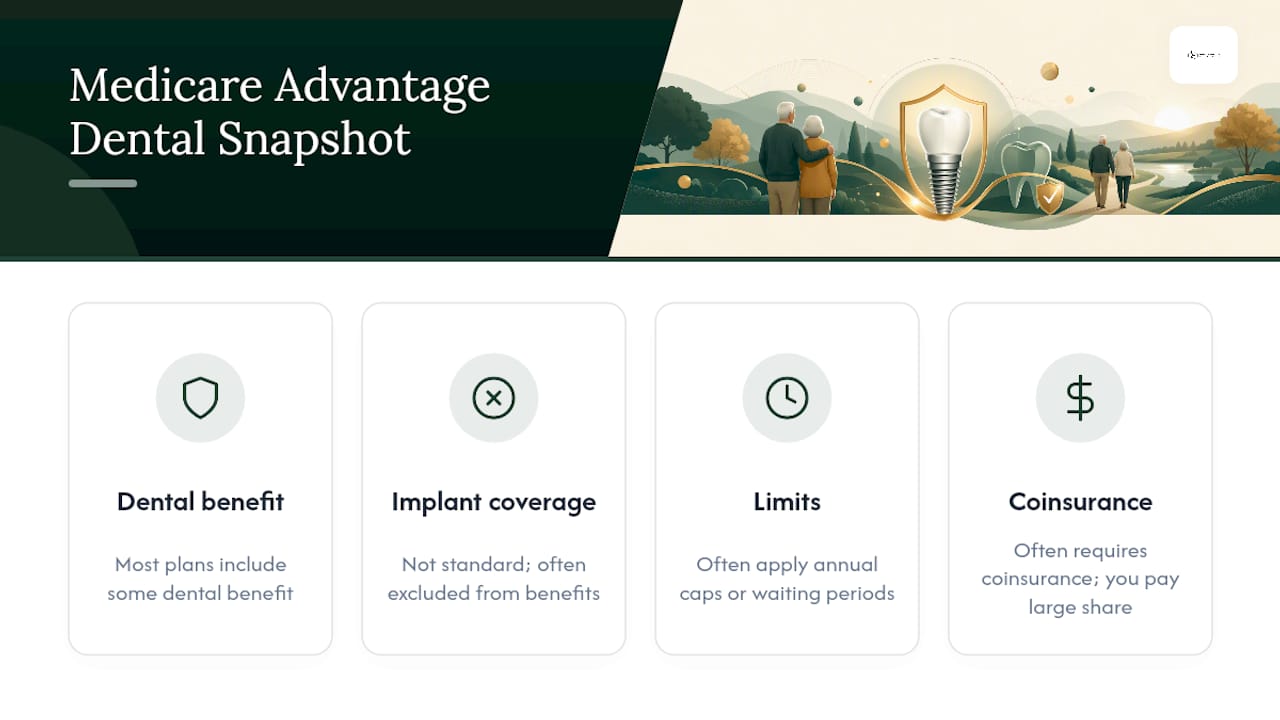
Implant coverage specifically is not standard, and most plans that do include it apply annual caps, waiting periods, or coinsurance that leaves you covering a large share yourself. The takeaway isn’t that dental benefits are rare. It’s that “having dental coverage” and “having implant coverage” are two very different things, and only reading your own plan’s fine print tells you which one you actually have.
A local perspective on sorting through dental coverage questions
Mountaintop Insurance works with Central Oregon and Bend residents every week who assume their Medicare Advantage plan covers more dental work than it actually does. Bring your current Evidence of Coverage and a dentist’s cost estimate to a consultation, and we’ll walk through the plan language with you, compare it against other options, and help with enrollment if a switch makes sense.

Get Help Comparing Your Dental Coverage Options
Reading an Evidence of Coverage document cover to cover isn’t how most people want to spend an afternoon, and figuring out whether your specific implant procedure falls under a plan’s “major restorative services” category takes more than a quick skim. Mountaintop Insurance offers free consultations for Central Oregon and Bend residents where an agent reviews your actual plan documents with you, line by line, and compares them against other Medicare Advantage and supplement options available in your area.
Bring your current plan name and member ID, a copy of your EOC or Summary of Benefits, and any cost estimate your dentist has already provided. From there, we can tell you plainly whether your plan covers what you need, what a switch might look like, and when enrollment windows would allow you to make a change. Remote consultations are available for residents elsewhere in the country who want the same plain-language help.
Ready to find out what your plan actually covers? Schedule a free consultation with Mountaintop Insurance and get a straight answer instead of another round of guessing.
Sources
- Dental service coverage
- Does Medicare Advantage cover dental implants?
- Medicare dental coverage (CMS)
- Coverage rules and scenarios (NCBI Bookshelf)
FAQ
Does Medicare cover dental implants in 2026?
Original Medicare does not cover dental implants. Some Medicare Advantage plans offer dental benefits, but implant coverage specifically remains uncommon and depends entirely on the individual plan.
How do I get Medicare to pay for dental implants?
Medicare only pays for dental work, including in rare cases tied to implants, when it’s inextricably linked to another Medicare-covered medical procedure, such as pre-transplant care. You’ll need documentation and a referral connecting the two treatments.
Is it worth getting dental implants at 70 years old?
That’s a decision between you and your dentist based on bone health, overall health, and how the implant affects chewing and quality of life, not an age cutoff. Cost and financing options matter more at this stage than age alone.
What should I look for in a Medicare dental plan?
Look for plans that specifically list major restorative services or implant riders in the Evidence of Coverage, not just general marketing about “dental coverage.” Check annual maximums, coinsurance, and prior authorization requirements before enrolling.
Can a local agent help me figure out my dental coverage?
Yes. Mountaintop Insurance reviews your plan’s Evidence of Coverage with you directly and compares options if your current plan falls short on dental benefits, at no cost for the consultation.
Recommended
Disclaimer: This article is for general educational purposes only and does not constitute personalized advice. Medicare rules and plan details change frequently.
Discuss Your Situation With Us