Is Part D Ending in Oregon? What Beneficiaries Should Know

TL;DR:
- Medicare Part D remains in Oregon, but the federal subsidy called the Part D Premium Stabilization Demonstration will end after 2026.
- Beneficiaries will still have access to coverage in 2027, though some premiums may increase as the subsidy expires.
- The program’s end is a policy change, not the termination of Medicare Part D itself, which continues under federal law.
Medicare Part D is not ending in Oregon. What is ending is a temporary federal subsidy called the Part D Premium Stabilization Demonstration, which CMS announced will conclude at the end of calendar year 2026. Standalone Part D plans and Medicare Advantage plans with drug coverage (MA-PD) continue operating under federal Medicare rules. The Low-Income Subsidy, also called Extra Help, is completely unaffected.
Here is what this means for most Oregon beneficiaries right now:
- Your Part D coverage does not disappear. Plans will still be available for 2027.
- Some premiums may change, because the subsidy that helped hold them down is expiring.
- Extra Help recipients keep their protections. The subsidy change does not touch that program.
- Final 2027 plan costs will not be published until mid-to-late September, so there is nothing to act on yet.
Table of Contents
- Is Part D ending in Oregon, or just a subsidy?
- Who could see changes in Oregon, and who is protected?
- When do the changes take effect, and when will you know the costs?
- How will ending the subsidy affect your premiums and drug costs?
- What should Oregon beneficiaries do right now?
- How to compare Part D plans in Oregon after the subsidy ends
- Where can Oregon residents get free, reliable help?
- Key Takeaways
- The part most beneficiaries overlook
- Free Medicare consultations in Bend, Oregon
- Useful sources
- FAQ
Is Part D ending in Oregon, or just a subsidy?
USA Today confirmed what CMS made clear in its technical release: Medicare Part D itself is not ending. The program that is concluding is the Part D Premium Stabilization Demonstration, a voluntary arrangement CMS created to smooth premium volatility after the Inflation Reduction Act redesigned the Part D benefit structure. Plan sponsors who participated received federal payments to keep their bids lower than pure market pricing would have produced.
CMS will discontinue that demonstration at the end of CY 2026. After that, standalone Part D plans price their bids on standard risk-based terms, the same way they did before the demonstration existed.
“CMS will discontinue the Part D Premium Stabilization Demonstration at the end of CY 2026. Final Medicare Advantage and Part D offerings and premiums will be released in mid-to-late September.” — CMS fact sheet, Medicare Part D 2027 National Average Monthly Bid Amount Information
The distinction matters. A demonstration program ending is a policy adjustment. The Part D benefit itself, the statutory right to prescription drug coverage under Medicare, remains intact.
Who could see changes in Oregon, and who is protected?
The beneficiaries most likely to notice a difference are those enrolled in standalone Part D plans (also called PDPs). These plans participated in the demonstration directly, so their premiums were held lower than market pricing alone would have set them. When the subsidy disappears, some plan sponsors may raise premiums to reflect actual costs.

Beneficiaries in MA-PD plans (Medicare Advantage with drug coverage) may see indirect effects, since MA bids and drug benefit design are interconnected. The impact there is less predictable and will vary by plan.
Extra Help remains fully available to eligible beneficiaries nationwide, including every Oregon resident who qualifies. The Medicare Rights Center warned that lower-income beneficiaries without Extra Help face the greatest exposure, which makes checking eligibility before Open Enrollment especially worthwhile this year.
Key figure: The temporary subsidy cost an estimated $3.6 billion in 2026, according to AP News reporting on policy and finance experts. Ending it is framed by the administration as returning Part D to traditional market conditions.
Oregon follows the same federal rules as every other state. There is no Oregon-specific carve-out or separate state subsidy replacing the demonstration.
When do the changes take effect, and when will you know the costs?
The timeline is straightforward:
- Mid-to-late September 2026: — CMS publishes final MA and Part D plan offerings and premiums, along with the full MA/Part D landscape release.
Pro Tip: Don’t wait for a phone call. Check your mailbox in September for the ANOC, then cross-reference your plan’s new premium and formulary at Medicare Plan Finder before Open Enrollment opens October 15.
How will ending the subsidy affect your premiums and drug costs?
Snopes verified reporting from multiple major outlets: many beneficiaries will see modest premium changes, while others could face larger increases depending on which plan they are in and whether their plan sponsor participated heavily in the demonstration.

One concrete anchor: CMS released the 2027 National Average Monthly Bid Amount (NAMBA) at $296.05. That figure reflects what plan sponsors bid before any government adjustments and gives a baseline for understanding where market pricing currently sits.
| Metric | 2026 | 2027 (projected) |
|---|---|---|
| Part D out-of-pocket cap | $2,100 | $2,400 |
| NAMBA (national avg. monthly bid) | Not yet released for comparison | $296.05 |
| Part D Premium Stabilization Demonstration | Active | Ends |
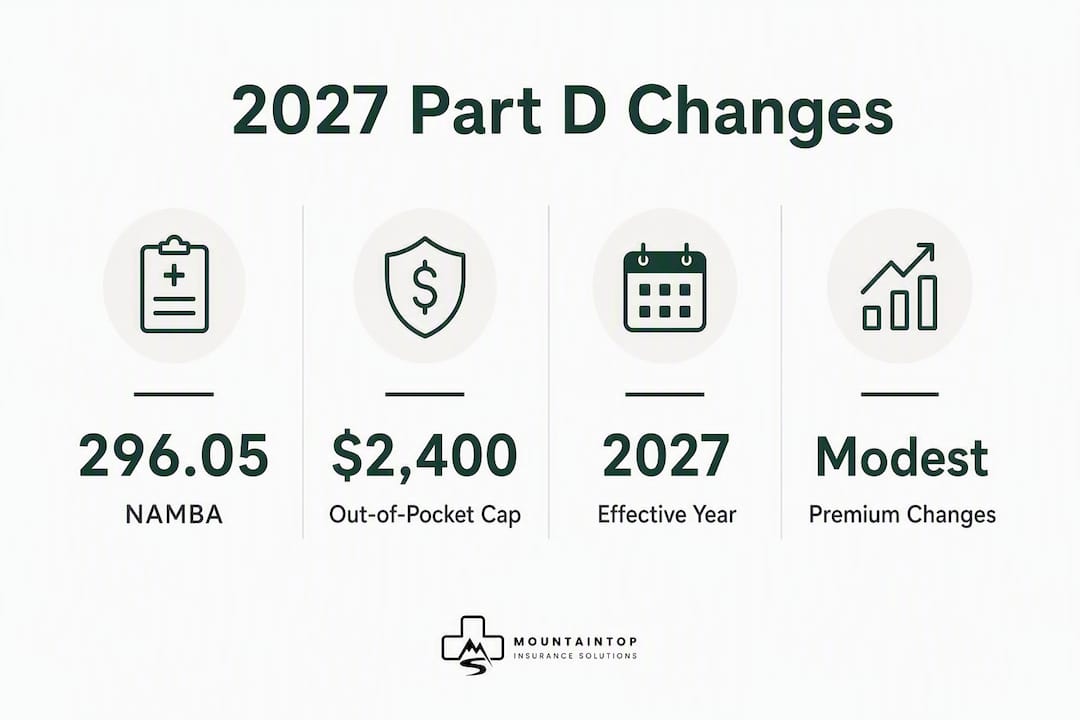
The out-of-pocket cap rises from $2,100 to $2,400 for 2027, but that statutory protection remains in place regardless of the subsidy change. No matter how high your drug costs climb during the year, your out-of-pocket spending stops at that cap.
Forbes analysts make a point worth repeating: premium is not the same as total cost. A plan with a higher monthly premium might still cost you less annually if its formulary covers your specific medications at lower cost-sharing tiers. Watch both numbers.
What should Oregon beneficiaries do right now?
Before Open Enrollment opens, take these steps:
- Check Extra Help eligibility. Apply through the Social Security Administration if your income and assets are limited. Eligibility can cut your 2027 drug costs significantly.
- Pull together your medication list. Write down every drug, dosage, and the pharmacy you use. You will need this to run an accurate plan comparison.
- Note your current plan’s premium and cost-sharing. Your ANOC in September will show what changes, but you need a baseline to compare against.
During Open Enrollment (October 15 – December 7):
- Compare total annual estimated cost, not just the monthly premium.
- Check that your drugs are on the new formulary at the same tier, or better.
- Confirm your preferred pharmacy is still in-network.
- Look at whether your plan is continuing, changing significantly, or exiting your area.
Medicare eligibility and enrollment windows can be confusing, especially when plan designs shift. If you are unsure whether you qualify for Extra Help, the Social Security Administration handles those applications directly at ssa.gov.
How to compare Part D plans in Oregon after the subsidy ends
- Export your medication list. Include drug name, dosage, and frequency for every prescription.
- Open Medicare Plan Finder at medicare.gov/plan-compare and enter your zip code, medications, and preferred pharmacy.
- Sort by estimated annual drug cost, not premium. The tool calculates your projected spending across all plan phases.
- Review the formulary for each top plan. Check which tier your drugs land on and whether any require prior authorization or step therapy.
- Understand the spending phases. Part D moves through a deductible phase, initial coverage, and catastrophic coverage. Know where your spending typically lands.
- Check network pharmacies. Preferred pharmacy networks can cut your cost-sharing substantially.
- Compare at least three plans before deciding.
Oregon’s State Health Insurance Assistance Program, SHIBA, offers free, unbiased counseling from trained volunteers. For complex medication situations or if you want someone to run the numbers with you, a licensed local agent can walk through the comparison in real time.
Pro Tip: Print or save your medication list as a PDF before you sit down with Plan Finder. Use the tool’s “compare” checkbox to put up to three plans side by side. It saves significant time and reduces the chance of missing a formulary gap.
For a structured list of questions to ask when comparing plans, Mountaintop Insurance has a short checklist built specifically for Oregon beneficiaries.
Where can Oregon residents get free, reliable help?
Official free resources:
- Oregon SHIBA (Statewide Health Insurance Benefits Advisors): free counseling, no sales pressure, trained volunteers statewide. Reach them through the Oregon Insurance Division.
- Medicare.gov Plan Finder: the official tool for comparing plans by drug cost and formulary.
- Social Security Administration (ssa.gov): handles Extra Help applications and eligibility questions.
- County Aging Services offices: many Oregon counties offer in-person Medicare help through Area Agencies on Aging.
When local, licensed help makes sense:
Mountaintop Insurance is a Bend-based agency serving Central Oregon residents. The agency offers no-cost consultations, helps beneficiaries compare Part D plans and Medicare Advantage options, and can file Extra Help applications alongside enrollment. There is no charge to the beneficiary for these consultations.
Pro Tip: When you call or meet with any agent or counselor, ask: “How will this plan cover my specialty medications next year, and what tier are they on?” That single question surfaces the most expensive surprises before you enroll.
Key Takeaways
Medicare Part D is not ending in Oregon. Only the temporary Part D Premium Stabilization Demonstration is concluding after 2026, and Extra Help remains fully intact for eligible beneficiaries.
| Point | Details |
|---|---|
| Part D is not ending | Only the temporary subsidy demonstration concludes; coverage continues in 2027. |
| Extra Help is unchanged | The Low-Income Subsidy remains available to all eligible Oregon beneficiaries. |
| Final costs arrive in September | CMS publishes 2027 plan premiums and the full landscape in mid-to-late September. |
| Open Enrollment is Oct 15 – Dec 7 | Compare total annual cost, not just premium, before switching or staying put. |
| Mountaintop Insurance offers free help | Bend-based consultations at no cost to beneficiaries for plan comparison and enrollment. |
The part most beneficiaries overlook
The loudest concern after this announcement has been premium increases, and that concern is fair. But the more consequential risk is quieter: beneficiaries who do nothing and auto-renew into a plan that has restructured its formulary or raised cost-sharing on their specific drugs.
The subsidy’s end forces plan sponsors to price on actual risk. That means plans that were artificially competitive may become less attractive, and plans that were already priced conservatively may look better by comparison. The ranking of plans in your zip code could shift meaningfully from 2026 to 2027.
What I tell clients in Central Oregon is this: the Open Enrollment window exists precisely for moments like this one. Use it. The beneficiaries who run a real comparison every year, even when they expect nothing to change, are the ones who avoid the unpleasant January surprise of a drug suddenly costing three times what it did in December.
The Extra Help angle is also underused. Many Oregon residents qualify and have never applied, either because they assumed they would not qualify or because the application felt complicated. It is not. And for those who do qualify, the savings dwarf anything a subsidy demonstration was providing.
Free Medicare consultations in Bend, Oregon
For Oregon beneficiaries sorting through 2027 Part D changes, Mountaintop Insurance offers something the national call centers do not: a local agent who knows Central Oregon plans, sits down with your actual medication list, and runs the numbers with you at no cost.
The agency handles Medicare plan comparison and enrollment across Parts A, B, C, and D, Medigap selection (including the Oregon Birthday Rule), and Extra Help applications. Consultations are free. Mountaintop Insurance is commission-based, paid by carriers when you enroll, so there is no fee to you and no obligation to enroll through the agency.
Bring your current plan documents, your medication list with dosages, and any ANOC notices you receive in September. Book a no-cost consultation at mountaintopins.com.
Useful sources
- CMS: Medicare Part D 2027 National Average Monthly Bid Amount Information — primary source for the NAMBA figure, demonstration end date, and September publication timeline
- USA Today: Is Medicare Part D ending? — headline clarification that Part D itself is not ending
- AP News: End of Part D subsidy and estimated program cost — $3.6 billion cost estimate and policy rationale
- Snopes: Trump Medicare Part D subsidies fact-check — verified reporting on premium change distribution
- Forbes: A Medicare drug subsidy is ending — analyst guidance on comparing total annual cost
- KCTV5: Part D OOP cap and subsidy end — 2026 and projected 2027 out-of-pocket caps
- Medicare Rights Center: Commentary on subsidy ending — advocacy perspective on lower-income beneficiary risk
- Social Security Administration — Extra Help applications and eligibility
This article is general information, not professional insurance or legal advice. Confirm your specific plan options and eligibility with CMS, SSA, or a licensed Medicare agent before making enrollment decisions.
FAQ
Will Medicare Part D go away in 2027?
No. Medicare Part D itself is not ending; only the temporary Part D Premium Stabilization Demonstration concludes after 2026, and standalone and MA-PD plans continue operating under federal Medicare rules.
How much does Medicare Part D cost in Oregon in 2027?
Final 2027 premiums will not be published until mid-to-late September 2026. The 2027 NAMBA is $296.05, and the out-of-pocket cap is projected at $2,400, but individual plan premiums vary by zip code and plan design.
Can Medicare Part D be canceled?
Individual plan sponsors can exit a market, but the Part D benefit itself is a statutory program that cannot be canceled by an administration. Beneficiaries always have access to at least one plan in their area.
Who gets Medicare Part D subsidies?
The Extra Help (Low-Income Subsidy) program covers eligible low-income beneficiaries and remains fully available in Oregon and nationwide. Apply through the Social Security Administration at ssa.gov to check eligibility before Open Enrollment.
Recommended
Disclaimer: This article is for general educational purposes only and does not constitute personalized advice. Medicare rules and plan details change frequently.
Discuss Your Situation With Us