Enrolling in Medicare and HSA Rules: What Changes

Enroll in any part of Medicare and you must stop making HSA contributions beginning the month your coverage starts. You can still spend money already in the account on qualified medical expenses, including many Medicare premiums. The catch is timing: Medicare Part A often applies retroactively, and contributions made during those retroactive months become excess contributions that trigger a tax penalty if you don’t fix them.
TL;DR:
- Enrolling in Medicare triggers the end of HSA contributions starting the month coverage begins, including any retroactive months up to six months prior.
- Applying for Medicare after age 65 often involves retroactive coverage, so contributions made during those months can become excess and incur penalties if not withdrawn.
- Qualified Medicare-related expenses, such as Part A, Part B, Part D premiums, deductible costs, and prescriptions, remain eligible for tax-free use of existing HSA funds.
- Contributions for the year are prorated based on months of HSA eligibility, with special rules applying if both spouses qualify for catch-up contributions or if only one spouse is on Medicare.
- To avoid penalties, individuals should stop contributions at the correct time, document key dates, and withdraw excess amounts before tax filing deadlines, with professional guidance recommended for complex cases.
Table of Contents
- What Happens to Your HSA When You Enroll in Medicare
- When to Stop Contributing and the Retroactive Coverage Trap
- What You Can Still Pay for With HSA Funds
- Contribution Limits, Proration, and Catch-Up Contributions
- How to Fix Excess Contributions Before They Cost You
- Your Transition Checklist: HR, SSA, and Your HSA Trustee
- A Straight Answer About the Mistakes We See Most Often
- Get Local Help Timing Your Medicare and HSA Transition
- Sources
- FAQ
What Happens to Your HSA When You Enroll in Medicare
The IRS spells this out plainly in Publication 969: your HSA contribution limit drops to zero starting the first month you’re enrolled in Medicare, and this rule reaches back into any period of retroactive coverage. “Enrolled” means any part, not just Part B. Sign up for Part A alone and your HSA eligibility ends the same way it would if you signed up for the full package.
This isn’t really about turning 65. Age alone changes nothing. What ends your eligibility is the act of enrolling, which is why some people keep contributing well past their 65th birthday by delaying Medicare while they stay on an employer’s high-deductible health plan.
Once enrollment kicks in, a few things happen at once:
- Payroll deductions into the HSA need to stop the month coverage begins, not the month you apply.
- Any employer matching or seed contributions to the HSA stop on the same timeline.
- You’re still allowed to spend down the existing balance for qualified expenses indefinitely.
- Your tax filing for that year will need to reflect a prorated contribution limit, not the full annual figure.
When to Stop Contributing and the Retroactive Coverage Trap
Here’s where people get burned. If you apply for Medicare after your 65th birthday, Part A coverage can be backdated up to six months, a detail Medicare.gov’s enrollment guidance confirms. That backdating doesn’t just affect your Medicare paperwork. It reaches back and disqualifies HSA contributions made during those retroactive months, even though nothing looked wrong at the time you made them.

The application date and the coverage start date are two different things, and confusing them is the single most common mistake in this transition.
Follow this sequence to stay clean:
- Notify HR or payroll the moment you plan to apply for Medicare, not after your card arrives.
- Pause HSA payroll contributions the month you submit your application, not the month coverage takes effect.
- Confirm with your HSA trustee how they’ll treat contributions made near your enrollment date.
- Write down every relevant date: birthday, application date, coverage start date, and last contribution date.
Pro Tip: If you’re applying for Medicare more than six months after turning 65, assume retroactive coverage will apply and stop contributing before you submit anything. Waiting for a confirmation letter is how excess contributions happen.
What You Can Still Pay for With HSA Funds
Losing contribution eligibility doesn’t touch the money already sitting in your account. Those dollars stay yours, and they can still cover a wide list of Medicare-related costs tax-free.
Eligible expenses include:
- Part A premiums, if you’re one of the people who pays them
- Part B premiums
- Part D premiums
- Medicare Advantage plan premiums
- Deductibles, copays, and coinsurance under Original Medicare or Advantage plans
- Prescription costs, plus dental, vision, and hearing expenses
One important exception: Medigap (Medicare Supplement) premiums are not HSA-eligible, a distinction that trips up a lot of people who assume any Medicare-related premium qualifies. If you’re comparing supplement options, it’s worth understanding how Medigap coverage works before you count on HSA funds to pay for it.
You don’t have to reimburse yourself immediately, either. Medicare’s own page on paying premiums notes that some premiums can even be paid directly with an HSA card through online payment tools. As long as you keep the receipt, you can reimburse yourself years later for a qualified expense paid out of pocket.
Contribution Limits, Proration, and Catch-Up Contributions
For 2025, the standard HSA contribution limits sit at $4,300 for self-only coverage and $8,550 for family coverage, with an additional $1,000 catch-up allowed for anyone 55 or older. These aren’t all-or-nothing figures in your enrollment year. The limit gets prorated based on how many months you were actually HSA-eligible.
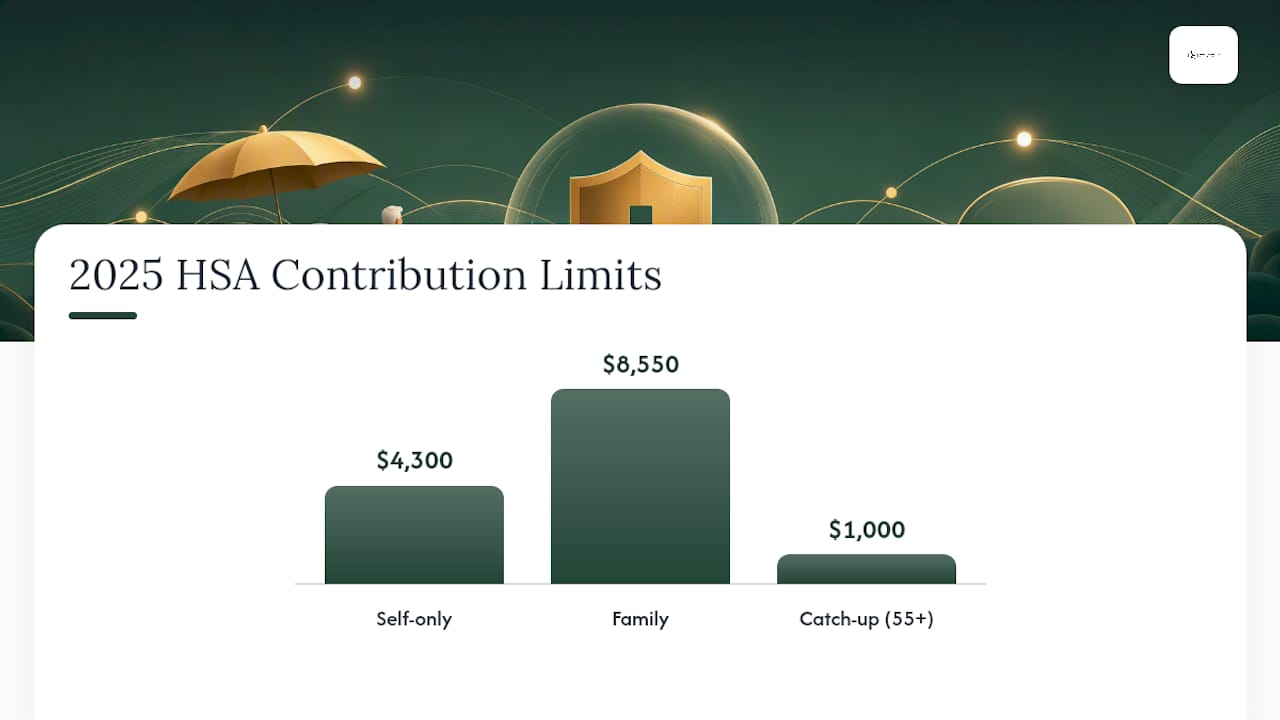
If you enroll in Medicare mid-year, your allowable HSA contributions are prorated based on the number of months before Medicare enrollment during which you were eligible.
A few wrinkles worth knowing:
- Catch-up contributions require your own HSA account. If both spouses are 55+, each needs a separate account to claim the full catch-up amount.
- One spouse enrolling in Medicare doesn’t automatically end the other spouse’s eligibility, as long as the non-Medicare spouse keeps qualifying HDHP coverage.
- Proration math should use the month you became ineligible, not the month you filed paperwork.
How to Fix Excess Contributions Before They Cost You
An excess contribution is any amount put into the HSA for a month you weren’t actually eligible, and the Congressional Research Service notes these amounts face a 6% excise tax every year they go uncorrected. That’s an annual penalty, not a one-time fee, which is exactly why fixing it fast matters.
Contributions made during months of retroactive Medicare coverage are treated as excess. Withdrawing the excess amount, along with any earnings it generated, by your tax return due date (including extensions) avoids the excise tax entirely.
Here’s the fix in practice:
- Calculate the exact excess amount, factoring in retroactive months.
- Contact your HSA trustee and request a “withdrawal of excess contribution,” specifying the tax year.
- Withdraw the excess plus any earnings it generated before your filing deadline, extensions included.
- Report the withdrawal correctly on your tax return and keep the trustee’s confirmation for your records.
If your situation involves multiple retroactive months, a spouse’s separate account, or contributions spread across employer and personal funding, loop in a tax professional. The math gets complicated fast, and a $50 mistake compounds annually until someone catches it.
Your Transition Checklist: HR, SSA, and Your HSA Trustee
Before you submit anything to Social Security, run through this short list:
- Confirm your current HDHP still qualifies you for HSA contributions right up to your Medicare application date.
- Ask HR exactly when payroll will stop HSA deductions relative to your Medicare application, not your coverage date.
- Ask your HSA trustee how they flag or handle contributions made close to a Medicare enrollment date.
- Ask the Social Security Administration to confirm your specific coverage start date in writing, especially if you’re applying after 65.
- Save every receipt for medical expenses you might want to reimburse from HSA funds later.
Pro Tip: Ask SSA directly whether your Part A start date will be retroactive before you file. That single question can save you months of unwinding an excess contribution later.
If the timing feels tangled, especially around retroactive coverage or coordinating a spouse’s separate HDHP eligibility, Mountaintop Insurance offers free consultations to Central Oregon residents working through exactly this kind of decision.
A Straight Answer About the Mistakes We See Most Often
The retroactive Part A trap catches more people than any other rule in this space. Someone applies for Medicare at 66, assumes their HSA eligibility ends the day they sign the paperwork, and doesn’t realize six months of contributions just became excess. The fix is usually simple once it’s caught: withdraw the excess, document it, move on. Most of these errors are fixable, and getting local guidance before you file beats untangling a penalty after the fact.
— Jesse Zimmerman
Get Local Help Timing Your Medicare and HSA Transition
Mountaintop Insurance is the alternative to a call-center hotline for Medicare timing questions in Central Oregon: you get a real person who walks through your specific enrollment date, HDHP status, and HSA situation before you file anything with Social Security. Free consultations cover Medicare Parts A through D, Medigap options like the Oregon Birthday Rule, and the enrollment timing questions that trip up HSA holders most. Whether you’re weeks from applying or already navigating a retroactive coverage surprise, the goal is the same: catch the timing issue before it becomes a tax problem. Visit the Medicare services page to schedule a free, no-pressure consultation and get your enrollment timeline mapped out before you submit anything to SSA.
Sources
- Publication 969 (2025), Health Savings Accounts and Other Tax-Favored Health Plans | Internal Revenue Service
- Health Savings Accounts (HSAs) and Medicare — Congressional Research Service
FAQ
What happens if you have an HSA and Medicare?
You keep the money already in your HSA and can still spend it on qualified medical expenses, but you lose the ability to contribute new funds starting the month your Medicare coverage begins.
Do you have to stop HSA contributions six months before Medicare?
Not exactly six months automatically, but if you apply for Medicare after age 65, Part A can be retroactive up to six months, so many people stop contributing before applying to avoid creating excess contributions.
Can you contribute to an HSA after 65 if you’re not on Medicare?
Yes. If you delay Medicare enrollment and keep qualifying high-deductible health plan coverage, age alone doesn’t end your HSA eligibility.
What happens if you contribute to an HSA after enrolling in Medicare?
Those contributions count as excess contributions and face a 6% excise tax each year they go uncorrected, unless you withdraw the excess plus earnings by your tax filing deadline.
Recommended
Disclaimer: This article is for general educational purposes only and does not constitute personalized advice. Medicare rules and plan details change frequently.
Discuss Your Situation With Us