Medicare Part C Explained: How Advantage Plans Really Work

Medicare Part C, also known as Medicare Advantage, is a Medicare-approved plan sold by private insurance companies that bundles your Part A hospital coverage and Part B medical coverage into a single plan, usually with Part D drug coverage folded in too. People choose it mainly for two reasons: extra benefits like dental and vision, and a yearly cap on out-of-pocket spending that Original Medicare does not offer on its own. The trade-off is real, though.
- Bundles Parts A and B, and typically Part D, into one plan
- Sold by private insurers approved by Medicare, not by the government directly
- Trades some provider freedom for extra perks and a spending cap
- Verify details at Medicare.gov or with a local agent like Mountaintop Insurance before enrolling
Key Takeaways
Medicare Part C bundles Original Medicare with private-plan extras and a spending cap, but it requires trading some provider freedom for network rules and prior authorization.
| Point | Details |
|---|---|
| Coverage baseline | Every Medicare Advantage plan must cover everything Original Medicare covers, no exceptions. |
| Cost protection | Plans must set an annual out-of-pocket maximum for Part A and B services, unlike Original Medicare alone. |
| Access trade-off | Networks and prior authorization can limit which doctors and services you access without extra cost. |
| Timing matters | Missing the Annual Election Period or MA OEP can lock you into a plan or trigger penalties. |
| Local guidance | Mountaintop Insurance offers free consultations to match Central Oregon residents with the right plan. |
Table of Contents
- What Does Medicare Part C Cover?
- How Is Medicare Part C Different From Original Medicare?
- What Does Medicare Part C Actually Cost?
- What Types of Medicare Advantage Plans Are There?
- When Can You Enroll in or Switch Medicare Part C Plans?
- Is Medicare Part C a Good Choice? Pros, Cons, and a Quick Checklist
- How Mountaintop Insurance Helps Central Oregon Residents Decide
- An Editorial Take on Medicare Part C
- Get Local Help Choosing the Right Medicare Plan
- Sources
- FAQ
What Does Medicare Part C Cover?
Every Medicare Advantage plan has to cover everything Original Medicare covers. That’s not optional. Insurers can’t sell a Part C plan that skips medically necessary hospital stays, doctor visits, or the services covered under Parts A and B unless they replace it with something equal or better.
Where plans differ is in the extras. Most Medicare Advantage plans wrap in Part D prescription drug coverage, and CMS data shows many plans now include it standard. If you pick a plan without built-in drug coverage and skip Part D elsewhere, you risk a late-enrollment penalty down the road that follows you for as long as you have Medicare.
Beyond the required basics, plans compete on extras:
- Routine dental cleanings and sometimes major dental work
- Vision exams and an allowance toward glasses or contacts
- Hearing aids and hearing exams
- Gym memberships or fitness programs like SilverSneakers
- Over-the-counter allowance cards for items like vitamins and bandages
- Transportation to medical appointments in some service areas
Pro Tip: Don’t assume two plans with similar premiums offer similar extras. One might cover $2,000 in dental work a year; another might cap it at $500. Read the Summary of Benefits, not just the brochure headline.
Prior authorization is the catch most people miss. A plan may require sign-off before covering an MRI, a specialist referral, or durable medical equipment, and benefit details shift from plan to plan and year to year.
How Is Medicare Part C Different From Original Medicare?
The biggest difference is structure. Original Medicare is Parts A and B run by the federal government, with Part D and a Medigap policy sold separately if you want drug coverage and gap protection. Medicare Advantage rolls most of that into one private plan with its own rules.
Access changes too. Original Medicare lets you see any provider nationwide who accepts Medicare, no referrals required. Medicare Advantage plans build networks, and going outside that network can mean paying full price or getting no coverage at all, depending on the plan type.
- Original Medicare: nationwide access, minimal prior authorization, no annual out-of-pocket cap without Medigap
- Medicare Advantage: regional networks, common prior authorization requirements, built-in annual out-of-pocket maximum
- Medigap: generally sold only to Original Medicare enrollees, not to those in a Part C plan
Here’s the part people regret learning too late: once you’re in a Medicare Advantage plan, you usually can’t buy a Medigap policy, and switching back to Original Medicare later may mean losing your guaranteed-issue rights. An insurer can then medically underwrite you for Medigap, and a health condition could get you denied or charged more.
What Does Medicare Part C Actually Cost?
You still pay your standard Part B premium no matter which path you choose, since Medicare Advantage doesn’t replace that. On top of it, many plans charge their own monthly premium, though plenty of plans are advertised at $0 a month. A $0 premium doesn’t mean $0 cost. You’ll still encounter copays for doctor visits, coinsurance for procedures, and possibly a separate deductible for drugs or services.
The out-of-pocket maximum is the number that matters most. Every Medicare Advantage plan is required to set an annual limit on what you pay for covered Part A and Part B services, and once you hit it, the plan covers those costs for the rest of the year. Original Medicare has no such ceiling unless you buy a supplemental Medigap policy.
- Part B premium: paid regardless of which Medicare path you choose
- Plan premium: ranges from $0 to a set monthly amount, varies by county and insurer
- Copays and coinsurance: add up fast for frequent specialist visits or procedures
- Out-of-pocket maximum: caps your worst-case year, but the cap itself varies by plan
Plans can change premiums, copays, and covered drugs every year. Insurers must send an Annual Notice of Change before the fall enrollment window opens, and skipping that letter is one of the most common mistakes enrollees make.
What Types of Medicare Advantage Plans Are There?
Not all Part C plans work the same way, and the type you pick determines how much freedom you get to choose doctors.
- HMO (Health Maintenance Organization): Requires a primary care doctor and referrals to see specialists; usually no coverage outside the network except emergencies.
- PPO (Preferred Provider Organization): Lets you see out-of-network providers at a higher cost, no referral typically needed.
- SNP (Special Needs Plan): Designed for people with specific chronic conditions, dual Medicare/Medicaid eligibility, or institutional care needs.
- PFFS (Private Fee-for-Service): Sets its own payment terms with providers; increasingly rare.
- MSA (Medical Savings Account): Pairs a high-deductible plan with a savings account funded by the insurer.
Prior authorization shows up most often around surgeries, imaging, and durable medical equipment, and it’s the number one operational headache reported by enrollees who assumed coverage would be automatic. Plan benefits and availability also vary by county, so the same insurer might offer a richer plan in Portland than in a rural stretch of Central Oregon.
When Can You Enroll in or Switch Medicare Part C Plans?
To join a Medicare Advantage plan, you generally need Part A and Part B and must live in the plan’s service area. Beyond that baseline, timing controls everything.
- Initial Enrollment Period (IEP): The seven-month window around your 65th birthday when you first sign up for Medicare and can choose a Part C plan.
- Annual Election Period (AEP): October 15 through December 7 every year, when anyone can switch plans, drop or add Part D, or move to or from Medicare Advantage; changes take effect January 1.
- Medicare Advantage Open Enrollment Period (MA OEP): January 1 through March 31, available only if you’re already in an MA plan and want to switch to a different one or return to Original Medicare.
- Special Enrollment Periods (SEPs): Triggered by events like moving out of your plan’s service area, losing employer coverage, or qualifying for Medicaid.
Missing these windows without a qualifying SEP can mean you must keep your current plan for the rest of the year or might face a Part D late-enrollment penalty. Use Medicare’s Plan Compare tool or call 1-800-MEDICARE before making a move, and check Medicare Part A and B eligibility rules if you’re unsure about your starting point.
Is Medicare Part C a Good Choice? Pros, Cons, and a Quick Checklist
There’s no universal right answer here. It depends on how you use healthcare and how much flexibility you value.
What tends to work in its favor:
- A built-in annual out-of-pocket cap that Original Medicare lacks on its own
- One card, one bill, often bundled with drug coverage
- Extra benefits like dental, vision, and hearing that Original Medicare doesn’t include
- Premiums that can run lower than paying separately for Part D and a Medigap policy
What tends to work against it:
- Network restrictions that limit which doctors and hospitals you can use
- Prior authorization requirements for procedures and equipment
- Benefits and formularies that can shift year to year
- Losing guaranteed-issue Medigap rights if you switch back to Original Medicare later
Pro Tip: Before enrolling, call your current doctors and ask directly whether they’re in-network for the specific plan you’re considering, not just “Medicare Advantage” in general. Network rosters change plan by plan.
Ask yourself: Do you travel often? Do you have a specialist you’re not willing to give up? Do your medications show up on the plan’s formulary? If any answer worries you, a conversation with a local agent about Medigap and long-term flexibility is worth the hour.

How Mountaintop Insurance Helps Central Oregon Residents Decide
Mountaintop Insurance is a local agency in Bend, Oregon, built around education instead of sales pressure. Medicare decisions are exactly where that approach earns its keep. Every county’s plan lineup is different, so what works for a client in Redmond might not work for someone in Sisters.
A free consultation typically covers:
- Which Part C plans are actually available in your specific service area
- A side-by-side look at premiums, copays, and the out-of-pocket maximum
- Whether keeping or giving up Medigap guaranteed-issue rights matters for your situation
- Hands-on help getting enrolled during the correct election period
Central Oregon residents get local expertise without the national call-center script, and the enrollment assistance covers Medigap, life insurance, and dental and vision alongside Medicare itself.
An Editorial Take on Medicare Part C
The conventional advice on Medicare Advantage boils down to “compare premiums and pick the cheapest plan.” That advice is backward. Premium is the smallest number in the equation for anyone with a chronic condition, a preferred specialist, or a habit of traveling to see grandkids three states over. The number that should drive the decision is the out-of-pocket maximum, paired with a hard check on whether your actual doctors sit inside the plan’s actual network this year, not last year.
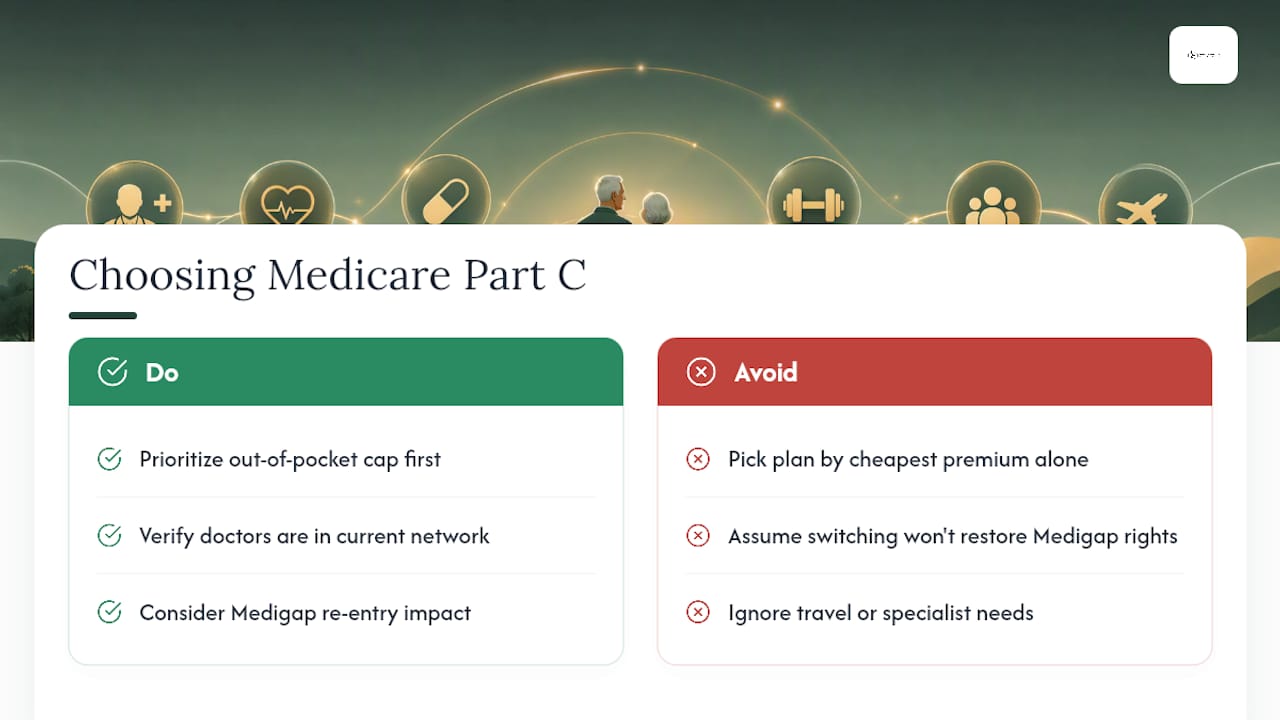
What gets underrated is the one-way door problem. Enrollees treat the switch from Original Medicare to Part C as reversible, and technically it is, but the Medigap guaranteed-issue rights often don’t come back with you. That’s not a footnote. It’s the single biggest reason to think through this decision once, carefully, rather than chasing whichever plan mails the flashiest brochure each fall.
Prioritize network verification and the out-of-pocket cap first. Premium comparison comes after, not before.
Get Local Help Choosing the Right Medicare Plan
Reading about Medicare Advantage online only gets you so far. Plan availability, network rosters, and drug formularies change by county and by year, and a plan that fits your neighbor in La Pine might not fit you in Bend. Mountaintop Insurance offers free, no-pressure consultations that translate everything above into a specific recommendation for your ZIP code, your doctors, and your prescriptions, without the high-pressure tactics common at national call centers.
The consultation covers Medicare Parts A through D, Medigap options including Oregon’s Birthday Rule, and supplemental dental and vision coverage in one sitting. Visit Mountaintop Insurance’s Medicare services page to schedule a free consultation and get a plan comparison built around where you actually live.
This article is general information, not a substitute for advice from a qualified financial advisor. Consult a qualified financial professional about your own circumstances before acting on anything here.
Sources
Before enrolling, cross-check plan specifics directly with the source rather than relying on marketing brochures.
FAQ
What Is the Downside of Medicare Part C?
The main downsides are network restrictions and prior authorization requirements, which can limit access to specialists or out-of-network providers, and losing guaranteed-issue Medigap rights if you switch back to Original Medicare later.
Do I Need Medicare Part D if I Have Medicare Part C?
Most Medicare Advantage plans already include Part D drug coverage, but if yours doesn’t and you go without other drug coverage, you risk a lasting late-enrollment penalty.
What Is the Average Monthly Cost of Medicare Part C?
Plan premiums range from $0 to a set monthly amount depending on the insurer and county, but you’ll still pay your standard Part B premium and should budget for copays, coinsurance, and the plan’s out-of-pocket maximum.
What Is a Common Problem for Part C Plans?
Prior authorization and narrow networks are the most frequently reported issues, especially when a preferred specialist or a needed procedure turns out to require insurer approval or falls outside the plan’s coverage area.
How Do I Compare Medicare Part C Plans Effectively?
Use Medicare.gov’s Plan Compare tool or call 1-800-MEDICARE to check plan-specific costs and networks, and consider a free consultation with a local agent like Mountaintop Insurance for help interpreting the details.
Recommended
Disclaimer: This article is for general educational purposes only and does not constitute personalized advice. Medicare rules and plan details change frequently.
Discuss Your Situation With Us