RSV Vaccine $0 for Medicare Beneficiaries — How to Confirm Coverage
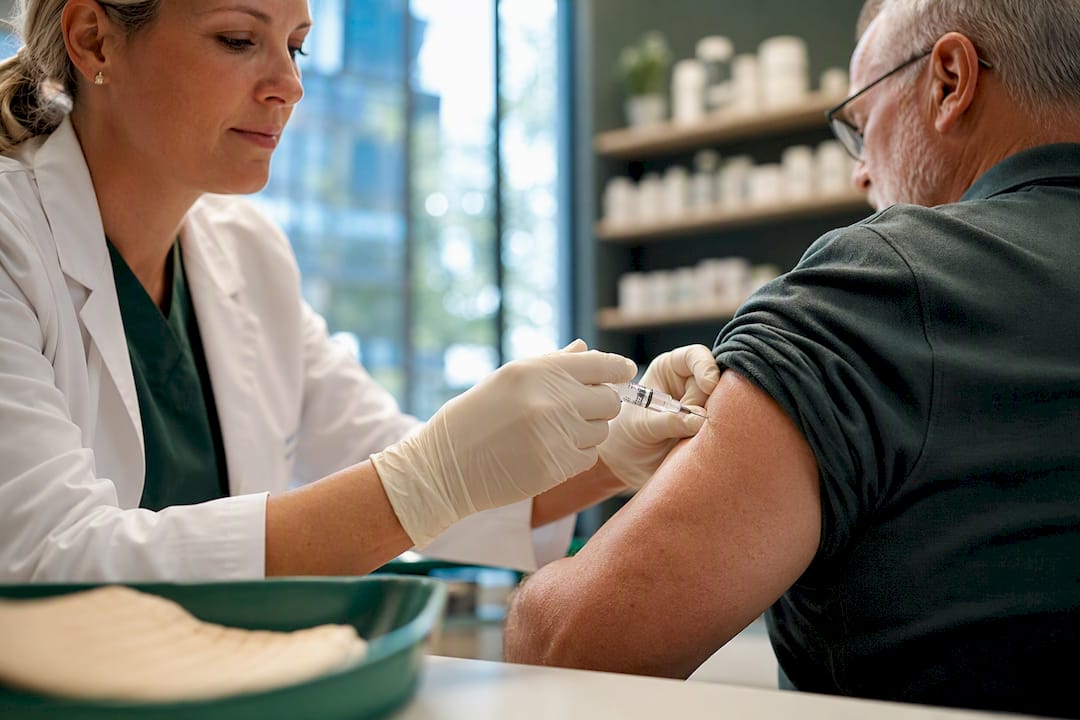
Yes. Medicare Part D covers the RSV vaccine, and if you have Part D or a Medicare Advantage plan with drug coverage, you pay $0 out of pocket for it. That’s the law under the Inflation Reduction Act, not a discount or a promotion. The CDC’s Advisory Committee on Immunization Practices (ACIP) sets who should get it and when, which we’ll break down below.
TL;DR:
- Medicare Part D and Medicare Advantage plans with drug coverage cover the RSV vaccine at no out-of-pocket cost, thanks to the Inflation Reduction Act, with over 6.5 million beneficiaries vaccinated in 2023.
- If you have a Medicare Advantage plan without drug coverage, the vaccine may not be covered, requiring you to verify your plan details before assuming coverage.
- Adults aged 75 and older should get the vaccine, while those aged 60 to 74 with increased health risks are recommended to get vaccinated before peak RSV season.
- Vaccines are available at pharmacies, clinics, or community centers, and you should bring your Medicare card and plan ID, while confirming formulary coverage beforehand if possible.
- Three licensed vaccines are available, and while safety profiles are reassuring, discuss any neurological health issues with your doctor before vaccination.
Table of Contents
- Does Medicare Cover the RSV Vaccine Under Part D?
- Who Should Get the RSV Vaccine, According to the CDC?
- Where Can You Get the RSV Vaccine, and What Should You Bring?
- What RSV Vaccines Are Available, and Are They Safe?
- What If Your Plan Says the Vaccine Isn’t Covered?
- A Local Adviser’s Take on RSV Vaccine Coverage
- Get Help Confirming Your Vaccine Coverage
- Sources
- FAQ
Does Medicare Cover the RSV Vaccine Under Part D?
The RSV vaccine falls under Medicare Part D coverage guidelines, not Part A or Part B. That distinction trips up a lot of people, because most vaccine-related Medicare questions default to Part B (which covers flu, pneumonia, and hepatitis B shots). RSV doesn’t work that way. It’s classified as a preventive adult vaccine, and preventive adult vaccines are a Part D responsibility.
Before 2023, that classification would have meant a copay, sometimes a hefty one, depending on your deductible status. The Inflation Reduction Act changed that. It eliminated cost-sharing entirely for ACIP-recommended adult vaccines covered under Part D. Medicare.gov states it plainly: beneficiaries with Part D pay nothing for the RSV shot. No copay, no coinsurance, and the vaccine doesn’t even count against your deductible.
The ASPE analysis of the IRA’s vaccine provision found that 6.5 million Part D enrollees received the RSV vaccine at no cost in 2023 alone. That’s not a niche benefit. It’s one of the more significant, and least talked about, wins to come out of that legislation.
Here’s where it gets more complicated: Medicare Advantage.
- If you have a Medicare Advantage plan with drug coverage (MAPD), your vaccine benefit works the same as standalone Part D. Zero cost-sharing applies.
- If you have a Medicare Advantage plan without drug coverage (MA-only), that plan has no obligation to cover the RSV vaccine, because there’s no Part D benefit attached to it.
- Some MA plans route vaccine coverage through Part B administratively even when the vaccine itself is legally a Part D drug. Check your plan’s Evidence of Coverage or call member services to be sure which bucket you fall into.
If you’re not sure whether your Advantage plan includes drug coverage, that’s worth confirming before you assume you’re covered. Our breakdown of how Advantage plans actually work walks through the MAPD versus MA-only distinction in more detail.
Who Should Get the RSV Vaccine, According to the CDC?
ACIP updated its guidance in June 2024, and it’s more straightforward than the vaccine recommendations that came before it. Every adult age 75 and older should get vaccinated. Adults 60 to 74 should get it if they’re at increased risk of severe RSV illness.
What counts as increased risk? The CDC’s list includes:
- Chronic heart disease or chronic lung disease, including COPD
- Severe obesity
- Weakened immune systems (from disease or medication)
- Chronic liver or kidney disease
- Diabetes with complications
- Residents of nursing homes or other long-term care facilities
By the numbers: Postlicensure studies reviewed by the CDC put RSV vaccine effectiveness against hospitalization at roughly 73% in adults 60 and older across several observational studies, though individual study estimates range depending on the season and population studied.
This is a single-dose vaccine, not an annual one like the flu shot. If you already got an RSV vaccine in a previous season, you don’t need a repeat dose right now. Current guidance treats one dose as providing protection for more than a year, and ACIP hasn’t recommended a booster schedule at this point. The best window to get vaccinated is late summer through early fall, ideally before RSV activity starts climbing in your area.
Where Can You Get the RSV Vaccine, and What Should You Bring?
Most Medicare beneficiaries get vaccinated at one of four places: a retail pharmacy, their primary care office, a community health center, or, for residents of skilled nursing facilities, on-site through the facility’s medical staff. Retail pharmacies tend to be the fastest option since many run walk-in immunization services without an appointment.
Billing works differently depending on where you go. Pharmacies typically bill the vaccine directly through your Part D plan using your Medicare Part D card, similar to how they’d process a prescription. Doctor’s offices sometimes bill differently, and if your Medicare Advantage plan is MA-only without drug coverage, this is exactly the point where a claim can get denied.
A short pre-visit checklist saves you a headache later:
- Bring your Medicare card and your Part D or Medicare Advantage plan ID card.
- Ask if a prescription or referral is required. Some pharmacies need one on file even though the vaccine itself is $0 cost.
- Bring a list of your current medications and chronic conditions, especially if you’re in the 60 to 74 age range and qualifying based on risk factors.
- If you’re unsure about your plan type, call your plan’s member services number before your appointment, not after.
Pro Tip: Call the pharmacy the same day you plan to go and ask them to check your formulary status over the phone. It takes two minutes and can save you from an awkward conversation at the counter about an unexpected bill.
What RSV Vaccines Are Available, and Are They Safe?
Three RSV vaccines are currently licensed for adults in the United States: Arexvy, Abrysvo, and mResvia. The CDC does not express a preference among them, so whichever one your pharmacy or clinic stocks is the one you’ll get, and that’s fine. There’s no clinical reason to shop around for a specific brand.
Effectiveness data collected after these vaccines reached the public, not just from the original clinical trials, shows meaningful protection against hospitalization.
On safety: health agencies have kept an active surveillance program watching for Guillain-Barré syndrome (GBS) following RSV vaccination, since a small signal appeared in early monitoring data. The signal has been small and the overall safety profile has remained reassuring through ongoing review, but it’s a legitimate reason to have a real conversation with your doctor if you have a history of GBS or another neurological condition. This is exactly the kind of nuance a five-minute pharmacy visit won’t cover. If you have underlying health conditions, raise them with your physician before your shot, not during checkout.
What If Your Plan Says the Vaccine Isn’t Covered?
Sometimes a pharmacist runs your card and gets a rejection. Before you assume the vaccine isn’t covered, or worse, pay out of pocket, take these steps in order.
- Confirm your plan type first. Standalone Part D and MAPD plans should cover this vaccine at $0. MA-only plans without drug coverage legitimately won’t, and that’s not an error, just how the plan is structured.
- Request a formulary exception if your plan has drug coverage but hasn’t added the vaccine yet. CMS guidance confirms plans can be slow to update formularies after a vaccine’s approval, and enrollees have the right to request an exception rather than absorb the cost themselves. Your prescriber or pharmacist can typically initiate this request.
- Document everything. Keep the date, the pharmacy or provider name, and any receipt or rejection notice. If it’s still unresolved, your State Health Insurance Assistance Program (SHIP) offers free help navigating the appeal.
Pro Tip: If a pharmacy tells you it’s not covered, ask them to specify whether the rejection came from the plan’s formulary or from a billing code issue on their end. Those are two very different problems with two very different fixes.
A Local Adviser’s Take on RSV Vaccine Coverage
Most of the coverage confusion I see doesn’t come from the policy itself. It comes from people assuming their Medicare Advantage plan works like Part D by default, without checking whether drug coverage is actually built in. That single gap accounts for most of the surprise bills clients bring to me.
The $0 out-of-pocket policy is real, and it’s one of the more generous corners of the Inflation Reduction Act. But “covered under Part D” and “covered under my specific plan” aren’t automatically the same sentence. Verify before you assume.
— Jesse Zimmerman
Get Help Confirming Your Vaccine Coverage
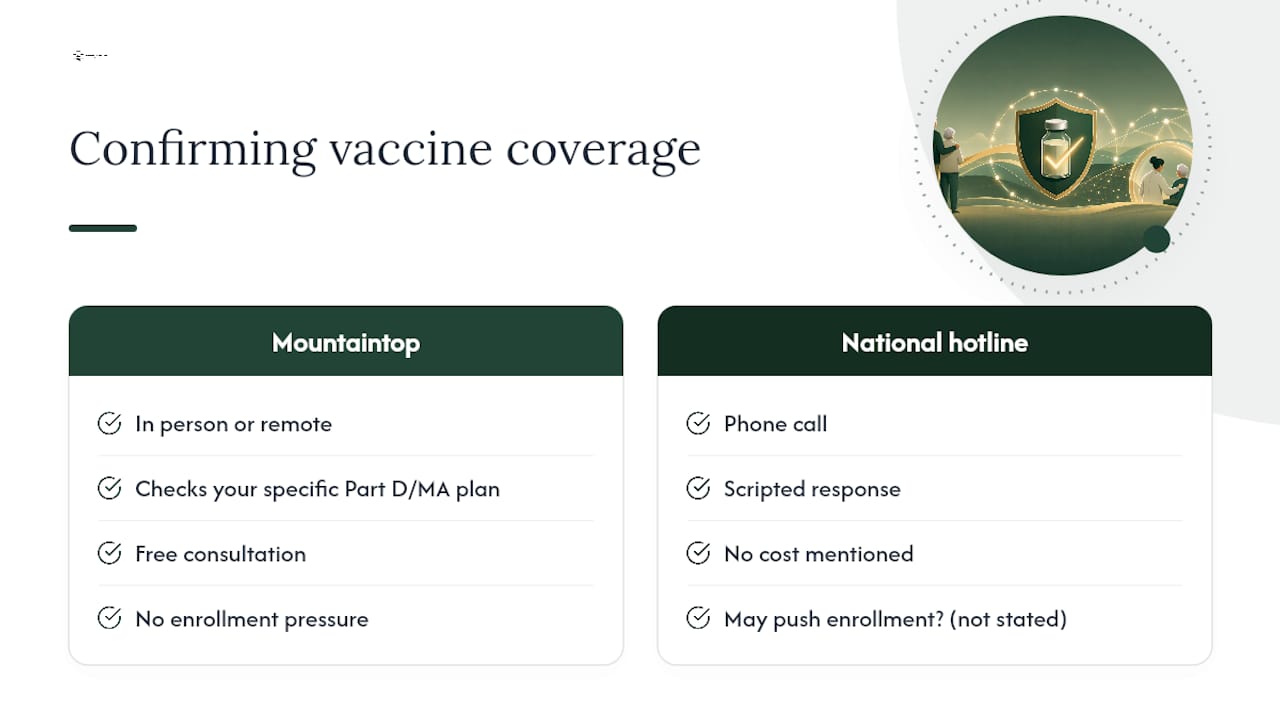
Mountaintop Insurance is the alternative to guessing your way through a pharmacy counter rejection. Instead of calling a national hotline and getting read a script, you sit down, in person or remotely, with someone in Bend who will actually pull up your specific Part D or Medicare Advantage plan and tell you exactly what’s covered before you show up for your shot. There’s no cost to the consultation and no pressure to enroll in anything through us. We look at your plan documents, flag whether you have MAPD or MA-only coverage, and walk you through what to say if a pharmacy pushes back. If you’d rather understand your full Part D picture, including how vaccines interact with your deductible, our Part D deductible breakdown is a good starting point. Ready to check your coverage? Schedule a free consultation with Mountaintop Insurance and get a straight answer before your next appointment.
This article is general information, not a substitute for advice from a qualified doctor. Consult a qualified healthcare professional about your own circumstances before acting on anything here.
Sources
- Respiratory Syncytial Virus (RSV) Shot
- CDC: RSV vaccine clinical guidance for adults
- MLN908764 – Medicare Part D vaccines
- Part D covered vaccines, no cost sharing (ASPE/HHS)
FAQ
Will Medicare Pay for My RSV Shot?
Yes, if you have Medicare Part D or a Medicare Advantage plan with drug coverage (MAPD), the vaccine is covered at $0 out-of-pocket cost under current law.
Is the RSV Vaccine Cost Covered by Medicare?
Fully, for anyone enrolled in Part D or MAPD. The Inflation Reduction Act removed all copays, coinsurance, and deductible requirements for ACIP-recommended adult vaccines, RSV included.
What Vaccines Will Be Covered by Medicare in 2026?
Part D continues covering all ACIP-recommended adult vaccines, including RSV, shingles, and Tdap, at no cost-sharing. Coverage details can shift if ACIP updates its recommendations, so checking your plan’s current formulary is worth doing each fall.
Should Seniors Get the RSV Vaccine Now?
If you’re 75 or older, or 60 to 74 with a qualifying risk factor like chronic heart or lung disease, the CDC recommends a single dose, ideally before RSV season ramps up in late summer or early fall. If you already received the vaccine in a past season, you don’t need another dose yet.
How Do I Get the RSV Vaccine Through Medicare?
Visit a retail pharmacy, your primary care office, or a community health center, and bring your Medicare Part D or Advantage card. If you’re uncertain about your coverage, a free consultation with an adviser at Mountaintop Insurance can confirm your plan type before you go.
Recommended
Disclaimer: This article is for general educational purposes only and does not constitute personalized advice. Medicare rules and plan details change frequently.
Discuss Your Situation With Us