Avoid a Part B Penalty: Medicare and VA Help for Central OR Veterans

Yes, you can have both Medicare and VA benefits at the same time, but they run as two separate systems that don’t coordinate payment on the same claim. Most veterans who qualify should enroll in Medicare Part A and Part B as soon as they’re eligible, since VA care alone can’t be billed to Medicare and vice versa. The one catch: if VA prescription coverage already works for you, you can often delay Part D without penalty. For plan-specific help, experienced insurance agents walk Central Oregon veterans through these decisions at no cost.
TL;DR:
- Veterans should enroll in Medicare Part A and B at 65 to access non-VA providers and avoid penalties, especially if they plan to see civilian specialists.
- Medicare covers services outside VA facilities, but VA pays for care at VA hospitals or authorized community sites, so using the wrong system can lead to unpaid bills.
- VA prescription benefits are creditable, allowing veterans to skip Part D unless they need medications not stocked by the VA or prefer local pharmacies.
- Veterans with a 100% service-connected disability often find Part D unnecessary if all prescriptions are managed through the VA.
- Consulting a local insurance expert helps clarify choices and avoid mistakes when combining VA and Medicare benefits.
Table of Contents
- How Do Medicare and VA Benefits Work Separately?
- When Should Veterans Enroll in Medicare Part A and Part B?
- VA Pharmacy vs. Medicare Part D: What Happens to Your Prescriptions?
- What About TRICARE for Life and Service-Connected Disabilities?
- How Do You Decide Which Benefit to Use?
- How Mountaintop Insurance Helps Veterans Sort Out Medicare
- Why Holding Both Systems Usually Pays Off
- Get Free Medicare Guidance From a Local Central Oregon Agency
- Where to Verify These Details
- Sources
- FAQ
How Do Medicare and VA Benefits Work Separately?
Think of Medicare and VA health care as two different toll roads. You can hold a pass for both, but you can’t use one pass to pay for a trip on the other road. Medicare pays for Medicare-covered services delivered by Medicare-certified providers, which means civilian doctors, hospitals, and specialists outside the VA system. The VA pays for care delivered at VA facilities or through VA-authorized community care. Medicare does not pay for anything you receive at a VA facility, even if you’re enrolled in Part A and Part B.
That separation plays out in real situations veterans run into constantly:
- A veteran sees a civilian cardiologist for a second opinion. Medicare pays, not the VA, since the visit happened outside the VA network.
- A veteran gets hip surgery at a VA hospital. The VA pays, full stop. Medicare isn’t in the picture.
- A veteran is hospitalized at a non-VA facility and the VA authorizes only part of the stay. In that case, Medicare may pick up the Medicare-covered services the VA didn’t authorize, while the VA pays for what it approved.
That last scenario is where confusion, and unpaid bills, tend to show up. You have to know before the visit which system you’re using, because neither one automatically fills in for the other.
When Should Veterans Enroll in Medicare Part A and Part B?
Timing matters more than most veterans realize, and getting it wrong is expensive for life, not just for a year.
- Initial Enrollment Period (IEP): This seven-month window surrounds your 65th birthday. Sign up here if you don’t have other qualifying coverage, and you avoid any penalty.
- General Enrollment Period (GEP): If you miss your IEP and have no valid reason, you can enroll during the GEP each year, but coverage starts later and a permanent late-enrollment penalty applies to Part B.
- Special Enrollment Period (SEP): Reserved for people who delayed Medicare because they had coverage through current employment. VA coverage does not qualify you for an SEP, which trips up a lot of veterans who assumed it would.
The VA itself recommends signing up for Parts A and B at 65, not because VA care is inadequate, but because it protects your access to non-VA providers and gives you a fallback if VA funding, staffing, or your own location changes down the road. If you’re on TRICARE for Life, this isn’t optional. You must keep Part B, since TFL only pays after Medicare does.
VA Pharmacy vs. Medicare Part D: What Happens to Your Prescriptions?
VA prescription drug coverage counts as creditable coverage under Medicare’s rules, meaning it’s considered at least as good as a standard Part D plan. Practically, that means you can skip Part D while you’re covered by VA pharmacy benefits without ever facing a late-enrollment penalty if you sign up later.
What you can’t do is stack the two for the same prescription. You pick one source per fill:
- Fill through VA pharmacy, and the VA covers it under VA rules and pricing.
- Fill through a Part D plan, and Medicare covers it under that plan’s formulary and copay structure, separate from VA.
- Enrolling in Part D for a specific medication generally means giving up VA mail-order pharmacy benefits for that particular drug.
Part D earns its keep when the VA doesn’t stock a medication you need, or when a local non-VA pharmacy is simply more convenient than shipping through VA mail order. For veterans who get all their prescriptions through VA without issue, adding Part D is usually redundant. Our GLP-1 Part D coverage breakdown covers one specific scenario where that calculus shifts.
What About TRICARE for Life and Service-Connected Disabilities?
TRICARE for Life changes the rules in a way flat VA coverage doesn’t. Medicare pays first, TFL pays second, and dropping Part B means losing your TFL benefit entirely. Our guide on avoiding TRICARE for Life traps walks through the enrollment mistakes that catch retirees off guard.
A few other situations change the math:
- Veterans with a 100% service-connected disability rating often have comprehensive VA coverage, which can make Part D genuinely unnecessary if all care and prescriptions run through the VA.
- Veterans in rural areas of Central Oregon, or those who travel seasonally, often lean on Medicare’s flexibility to see civilian providers when the nearest VA facility is hours away.
- Combat veteran designation can affect certain benefit categories, and understanding what that status covers helps clarify eligibility questions that overlap with VA health care.
How Do You Decide Which Benefit to Use?
Run through this before your next appointment, not during it.
- Map your care. List where you actually get treated: VA facility, civilian specialist, or a mix. That answer drives everything else.
- List your prescriptions. Note which ones VA pharmacy fills reliably and which ones require a workaround.
- Enroll on time. Sign up for Part A and Part B during your IEP unless you have a documented reason to delay. Decide on Part D based on your prescription list, not guesswork.
- Ask when unsure. Call Medicare, the VA, your local State Health Insurance Assistance Program, or a licensed local agent for a second opinion before a deadline passes.
Pro Tip: Keep a one-page list of which provider you used for which visit and which benefit paid. When VA or Medicare asks questions six months later, that page saves you hours of phone calls.
If you’re weighing Medicare Supplement options alongside VA coverage, our Medicare enrollment periods guide breaks down deadlines by month so nothing sneaks up on you.
How Mountaintop Insurance Helps Veterans Sort Out Medicare
Local insurance agents spend their days untangling exactly this kind of decision for veterans across Central Oregon, focusing on education and avoiding high-pressure sales tactics. The approach is education first: explain the rules, lay out the tradeoffs, then let the veteran decide.
Services that come up most often in these conversations:
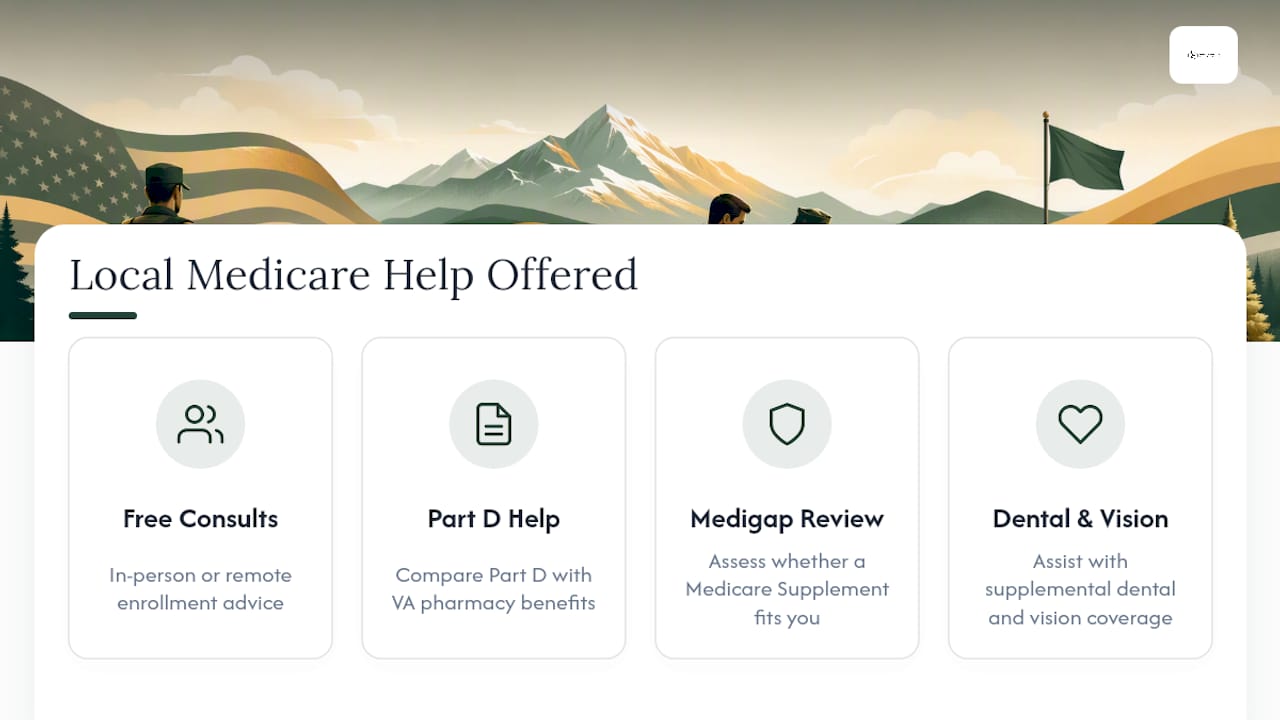
- Free consultations, in person or remote, to walk through VA and Medicare together
- Enrollment assistance during IEP, GEP, or a qualifying SEP
- Annual plan reviews so coverage keeps pace with changing needs
- Guidance on supplemental dental and vision coverage that VA and Medicare typically don’t include
Why Holding Both Systems Usually Pays Off
Keep your VA benefits and enroll in Medicare when you’re eligible. That combination gives you the widest possible net without giving up anything the VA already provides. Every veteran’s mix of prescriptions, providers, and travel patterns is different enough that a one-size answer rarely fits, which is exactly why sitting down with someone who knows the local landscape beats guessing from a pamphlet. The next section covers exactly how to get that conversation started.
— Jesse Zimmerman
Get Free Medicare Guidance From a Local Central Oregon Agency
Mountaintop Insurance is the alternative to guessing your way through VA and Medicare paperwork alone, or sitting on hold with a national call center that doesn’t know your local providers. As a Bend, Oregon agency, Mountaintop Insurance offers free consultations, in person or remote, to help you decide whether to enroll in Part A and Part B now, how to handle Part D against your VA pharmacy benefits, and whether a Medicare Supplement plan makes sense for your situation. Beyond Medicare guidance, the agency also helps with supplemental dental and vision coverage that fills gaps VA and Medicare leave open. If you’re approaching 65 or already juggling both systems, start with a free Medicare enrollment consultation and get a straight answer before your enrollment window closes.
Where to Verify These Details
For direct confirmation, check VA.gov’s page on coordinating VA care with other insurance or call the VA at 1-800-827-1000. For Medicare enrollment and penalty questions, visit medicare.gov or call 1-800-633-4227. Local veteran service officers and your state’s SHIP program can also help free of charge.
Sources
FAQ
Do I Have to Pay for Medicare if I Have VA Benefits?
Yes, Medicare premiums still apply even if you have VA benefits, since the two programs don’t waive each other’s costs. Most people don’t pay a Part A premium, but Part B carries a monthly premium regardless of your VA eligibility, and delaying Part B past your Initial Enrollment Period can add a permanent penalty on top of that premium later.
Do Veterans Get Extra Medicare Benefits?
Medicare itself doesn’t offer veterans a separate benefit tier or discount for military service. What veterans get instead is the option to use VA health care alongside Medicare, which effectively widens their coverage options beyond what either program offers alone.
How Might Federal Policy Changes Affect Veterans’ Benefits?
Federal legislation can adjust VA funding, community care eligibility, and Medicare rules from year to year, so it’s worth checking current details directly with the VA or Medicare rather than relying on older guidance. A local licensed agent, such as the team at Mountaintop Insurance, can help translate any policy update into what it actually means for your coverage.
Can You Have VA Benefits and a Medicare Advantage Plan at the Same Time?
Yes, you can enroll in a Medicare Advantage plan while keeping your VA benefits, but the two still don’t coordinate on the same claim. You choose VA care for VA-covered visits and use your Medicare Advantage plan for civilian providers, and Mountaintop Insurance’s Medicare guidance services can help you sort out which plan design fits your provider mix.
Recommended
Disclaimer: This article is for general educational purposes only and does not constitute personalized advice. Medicare rules and plan details change frequently.
Discuss Your Situation With Us