$1,736 Deductible: Medicare Part A Coverage 2026 for Central Oregon

Medicare Part A pays for inpatient hospital care, skilled nursing facility stays, hospice, and home health services. Most people get it premium-free after 10 years of paying Medicare taxes, but everyone faces a $1,736 deductible per benefit period in 2026, plus coinsurance if a hospital stay runs long. Enrolling on time matters, too, since missing your window can trigger penalties.
TL;DR:
- Most beneficiaries qualify for premium-free Part A after 10 years of work, but those with fewer quarters face up to a $565 monthly premium in 2026.
- The $1,736 deductible resets with each benefit period, so multiple hospital stays in a year can lead to repeated upfront costs.
- Coinsurance costs apply on a daily basis after 60 days in a benefit period, and lifetime reserve or psychiatric days are capped at 60 and 190 days respectively.
- Outpatient services, private-duty nursing, private rooms, and observation stays are common sources of surprise billing, as they are often billed separately to Part B.
- Enrolling late without a valid exception results in a penalty of 10% extra premium for double the period of delay, emphasizing the importance of timely sign-up.
Table of Contents
- What Does Medicare Part A Cover?
- How Much Does Part A Cost in 2026?
- Who Qualifies for Part A and When Should You Enroll?
- Why Do Benefit Periods Reset Your Deductible?
- What’s Not Covered, and Where Surprise Bills Come From
- How to Lower Your Part A Out-of-Pocket Costs
- Why Local Guidance Still Matters With Part A
- Get a Free Part A Review Before You Enroll
- Where to Verify These Numbers
- Sources
- FAQ
What Does Medicare Part A Cover?
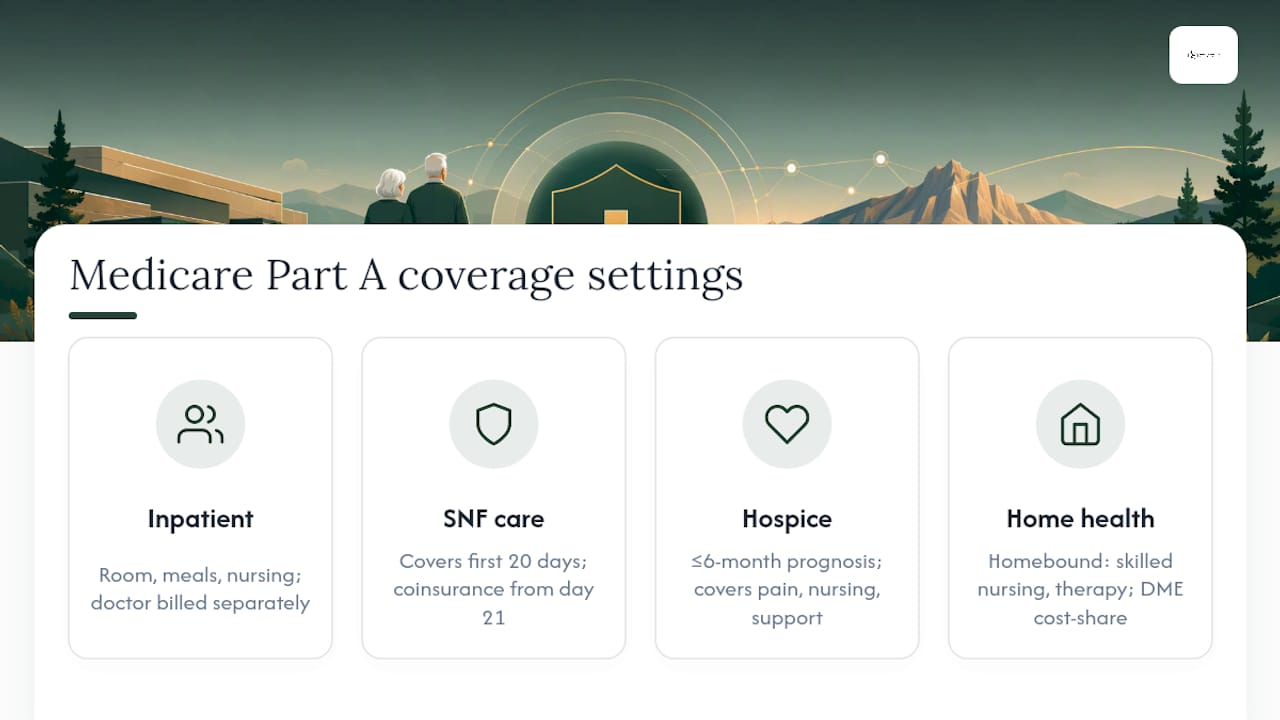
Part A is built around four coverage settings, and understanding what falls inside each one saves you from a lot of confusion when a hospital bill lands in your mailbox.
Inpatient hospital care covers your semi-private room, meals, general nursing, and the drugs and supplies you receive during the stay. What it does not cover is the doctor who treats you. Physician services during that same stay typically get billed separately to Part B, which surprises a lot of patients who assumed one hospital stay meant one bill.
Skilled nursing facility (SNF) care only kicks in after you’ve had a qualifying inpatient hospital stay of at least three days. Once that condition is met, Part A covers the first 20 days in full, with coinsurance starting on day 21.
Hospice care becomes available once a doctor certifies a terminal prognosis with a life expectancy of six months or less. It covers pain management, nursing, and support services, and most of it comes with no out-of-pocket cost, though small copays sometimes apply to certain drugs or respite stays.
Home health services are covered when a doctor certifies that you’re homebound and need skilled nursing or therapy. Durable medical equipment tied to that care often involves separate cost-sharing rules.
Across all four categories, Medicare Part A covers inpatient hospital care, SNF care, hospice, and home health, but it stops short of most outpatient services, private-duty nursing, and personal convenience items.
How Much Does Part A Cost in 2026?
Most beneficiaries pay nothing in monthly premiums for Part A. If you or your spouse paid Medicare taxes for at least 10 years, premium-free Part A is yours automatically at 65. If you fall short of that work history, you’ll pay a monthly premium of either $311 or $565, depending on how many quarters you did work.
Pro Tip: Check your Social Security earnings record before you turn 65. A few missing quarters can be the difference between free Part A and a $565 monthly bill.
The bigger number to watch is the deductible: $1,736 per benefit period in 2026. That’s not an annual figure. It resets every time a new benefit period starts, which means a bad year with multiple hospitalizations could cost you that deductible more than once.
Coinsurance follows a day-by-day schedule once you’re admitted:
Those 2026 coinsurance figures apply per benefit period, not per calendar year, which is exactly why the benefit period rules below matter so much.
Who Qualifies for Part A and When Should You Enroll?
Eligibility for Part A comes through a few distinct paths, and enrollment timing determines whether you pay a penalty for the rest of your Medicare life.
- Age-based eligibility. Turning 65 with at least 10 years of Medicare tax payments qualifies you for premium-free Part A automatically.
- Disability-based eligibility. Receiving Social Security disability benefits for 24 months qualifies you for Part A regardless of age.
- ESRD or ALS exceptions. End-stage renal disease or ALS diagnoses can qualify you for Medicare without the standard waiting periods.
- Initial Enrollment Period. This window runs three months before your birth month, includes your birth month, and extends three months after, for a total of seven months.
- Special or General Enrollment. If you missed your Initial Enrollment Period, a Special Enrollment Period may apply if you had qualifying coverage elsewhere, or you can use the General Enrollment Period.
If you must buy Part A and delay enrollment without a valid exception, the late-enrollment penalty adds 10% to your premium for twice the number of years you delayed. Reviewing Medicare enrollment periods before your 65th birthday is the simplest way to avoid that.
Why Do Benefit Periods Reset Your Deductible?
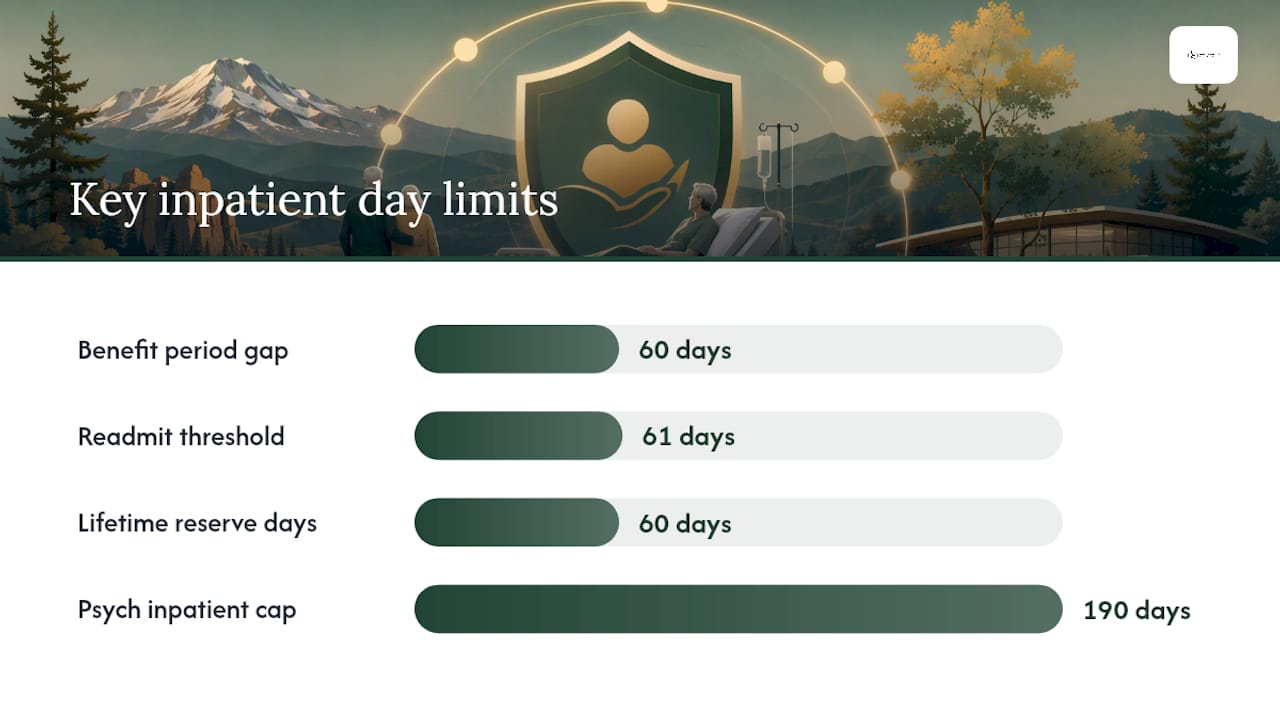
A benefit period isn’t tied to the calendar. It starts the day you’re admitted as an inpatient and doesn’t end until you’ve gone 60 consecutive days without any inpatient hospital care. Get readmitted on day 61, and you’re back to owing the full $1,736 deductible again, even if it’s the same year and the same condition.
A few limits compound this:
- Lifetime reserve days total 60, and once you use them, they’re gone for good.
- Inpatient psychiatric hospital coverage is capped at 190 lifetime days.
- Once benefit period limits are exhausted, you’re responsible for the full cost of continued inpatient care.
Pro Tip: Ask hospital staff directly, “Am I an inpatient or under observation?” The answer changes your entire cost picture, since observation status costs explained in detail shows how billing differs under Part B even when you spend the night.
What’s Not Covered, and Where Surprise Bills Come From
Part A has real gaps, and most surprise bills trace back to one of these:
- Outpatient services, including clinic visits and many outpatient procedures, get billed to Part B, not Part A.
- Private-duty nursing and private rooms aren’t covered unless medically necessary.
- Personal convenience items, like a television or phone in your room, come out of your pocket.
- Observation stays are one of the most common surprises, since they feel like a hospital admission but bill like an outpatient visit.
Ask for written confirmation of your admission status, and keep your discharge summary. It’s your best evidence if a claim gets disputed later.
How to Lower Your Part A Out-of-Pocket Costs
A few practical moves can blunt the financial hit from deductibles and coinsurance:
- Medigap policies are designed to cover gaps like the Part A deductible and daily coinsurance, which matters most if you expect a long inpatient or SNF stay.
- Medicare Advantage plans restructure cost-sharing entirely, often trading the traditional deductible model for copays, but they come with provider network restrictions worth weighing carefully.
- Before a planned hospitalization, confirm your inpatient status, ask about the appeals process for denied claims, and keep copies of every discharge and billing record.
- Reviewing your Part D deductible alongside Part A costs gives you a fuller picture of your total annual exposure.
If your situation involves multiple moving pieces, a free consultation with a licensed local agent can walk through your specific numbers.
Why Local Guidance Still Matters With Part A
Most of the confusion we see at Mountaintop Insurance isn’t about what Part A covers on paper. It’s about timing: someone worked past 65, someone’s spouse has different coverage, someone’s not sure if Medicaid changes the math. Free, no-pressure consultations for Central Oregon clients exist precisely for those tangled cases. If your enrollment history isn’t simple, that’s exactly when a local conversation beats guessing alone.
— Jesse Zimmerman
Get a Free Part A Review Before You Enroll
A 20 minute conversation can save you from a $565 monthly premium you didn’t need to pay, or an enrollment deadline you didn’t realize was closing. Free consultations are available to review your Part A eligibility, enrollment timing, and to compare Medigap against Medicare Advantage based on your specific health needs and budget. You’ll leave knowing exactly which deadline applies to you and whether supplemental coverage makes sense before you’re facing a hospital bill instead of planning for one. Visit Mountaintop Insurance to schedule your free consultation and get answers specific to your situation, not a generic script.
Where to Verify These Numbers
For official figures and full coverage rules, check Medicare.gov’s cost page, the Your Medicare Benefits booklet, or call 1-800-MEDICARE.
This article is general information, not a substitute for advice from a qualified doctor. Consult a qualified healthcare professional about your own circumstances before acting on anything here.
Sources
FAQ
Does Medicare Pay 100% of Part A?
No. Part A covers inpatient care fully only after you meet the $1,736 deductible, and coinsurance applies once a hospital stay passes 60 days in a benefit period.
Is Medicare Part A Free at Age 65?
For most people, yes. If you or your spouse paid Medicare taxes for at least 10 years, Part A is premium-free starting at 65.
Do I Need Both Medicare Part A and Part B?
Most beneficiaries carry both, since Part A covers inpatient facility care while Part B covers outpatient visits, physician services, and preventive care that Part A does not touch.
What’s Not Covered by Medicare Part A?
Part A excludes most outpatient services, private-duty nursing, non-medically-necessary private rooms, personal convenience items, and observation stays, which are billed under Part B instead.
How Does Medicare Part A Differ From Part B?
Part A is facility-based coverage for inpatient stays, skilled nursing, hospice, and home health, while Part B handles outpatient and physician services, a distinction that catches many new beneficiaries off guard.
Recommended
Disclaimer: This article is for general educational purposes only and does not constitute personalized advice. Medicare rules and plan details change frequently.
Discuss Your Situation With Us