Deschutes County Part B Givebacks: 5 Step 2026 Checklist

A Part B giveback is a premium credit that some Medicare Advantage plans pay toward your Part B premium, not a government rebate. It only applies if you’re enrolled in Parts A and B, personally pay your own Part B premium, and live where a giveback plan is offered. Availability shifts by county and year, and a bigger giveback can sometimes mean higher cost-sharing elsewhere, so the sticker number is never the whole story.
TL;DR:
- Availability of Part B giveback plans depends entirely on your county and plan year, and not all plans in a given area offer the benefit.
- The typical monthly giveback ranges around 75 dollars for 2024, with the maximum matching the full Part B premium, which is 202.90 dollars in 2026.
- To qualify, you must enroll in a Part C plan that offers the giveback, personally pay your Part B premium, and not be covered by Medicare Savings or Medicaid.
- The giveback credits are applied either as a deduction from your Social Security benefit or as a reduced Medicare invoice, but the process may take months to update.
- Plans offering higher givebacks often come with increased out-of-pocket costs, narrower networks, or higher deductibles, so compare total costs before switching.
Table of Contents
- What Is the Part B Giveback, Exactly?
- Who Qualifies for the Part B Giveback?
- How Does the Giveback Actually Show Up on Your Bill?
- How Common Are Part B Givebacks, and How Much Do They Pay?
- When Does a Giveback Actually Save You Money?
- How Do You Find Giveback Plans in Your County?
- What If the Giveback Doesn’t Show Up on Time?
- A Local Agent’s Take on Part B Givebacks
- Get Local Help Comparing Part B Giveback Plans
- Sources
- FAQ
What Is the Part B Giveback, Exactly?
The Part B giveback is a plan feature, not a Medicare benefit. It only exists inside Medicare Advantage, also called Part C, where private insurers contract with the federal government and can choose to apply part of their rebate dollars toward lowering what you pay for Part B. Original Medicare has no such feature, and neither does Medigap.
This trips people up constantly. The difference between Medicare Advantage and Original Medicare matters here because a giveback is only possible when a private carrier decides to offer it as part of a specific plan’s benefit design. Medicare Savings Programs (MSP) work completely differently. They’re a Medicaid-administered benefit that pays your Part B premium directly if your income qualifies, and if you’re on one, you’re not eligible for a giveback since you’re not personally paying that premium. Medigap plans, which pair with Original Medicare to cover cost-sharing gaps, never offer a giveback at all, since they aren’t part of the Medicare Advantage system.
A few distinctions worth keeping straight:
- The giveback reduces your premium bill or Social Security deduction. It never arrives as a check or cash deposit.
- It’s optional. Carriers choose whether to offer it, and they can drop it the following plan year.
- It has nothing to do with Extra Help or Medicare Savings Programs, which serve a different income-qualified population.
- Medigap buyers should not expect this credit under any circumstance, regardless of which supplement plan they choose.
Who Qualifies for the Part B Giveback?
Eligibility hinges on a short list of conditions, and missing even one disqualifies you. Before you get excited about a plan advertising a $50 or $100 monthly credit, run through this checklist:
- You’re enrolled in both Medicare Part A and Part B. Part B enrollment alone isn’t enough.
- You personally pay your own Part B premium out of pocket or through your Social Security deduction.
- You don’t have a Medicare Savings Program or Medicaid covering your Part B premium already.
- You enroll in the specific Medicare Advantage plan that offers the giveback, not just any plan from that carrier.
- That plan is actually sold in your county for the current plan year.
That last point is the one people underestimate. Giveback availability is entirely local. A plan offering a $70 monthly credit in one Oregon county might not exist one county over, and insurers add or remove the benefit from year to year based on their bid with CMS. The only way to know for certain is to check Medicare Plan Compare using your ZIP code, or to have a licensed agent pull current options for your address. Never assume a giveback you saw advertised nationally applies where you live.
How Does the Giveback Actually Show Up on Your Bill?
Once you’re enrolled in a qualifying plan, the credit lands one of two ways depending on how you already pay your Part B premium.
If Social Security deducts your Part B premium from your monthly check, the giveback lowers that deduction, so your net Social Security payment increases. If you pay Medicare directly because you haven’t started Social Security benefits yet, your Medicare premium invoice gets reduced instead.
Processing isn’t instant. It commonly takes a few months for the Social Security Administration to update the deduction after your plan enrollment finalizes, and any premium you overpaid during that gap typically gets credited retroactively once the systems sync up. This is one of the more common sources of confusion for new enrollees who expect the change on their very first check.
A few things to watch during that first billing cycle:
- Log in to your SSA online account and check your benefit verification letter for the updated deduction amount.
- If you pay Medicare directly, watch your next quarterly invoice for the adjusted amount rather than expecting an immediate change.
- Keep your plan’s enrollment confirmation and Annual Notice of Change (ANOC) handy in case you need to dispute a delay.
Pro Tip: Don’t panic if your first post-enrollment Social Security check looks unchanged. The adjustment often lags by a full billing cycle, and retroactive credits typically catch up automatically once SSA processes the update.
How Common Are Part B Givebacks, and How Much Do They Pay?
Givebacks have gone from a rare perk to a mainstream Medicare Advantage feature. A peer-reviewed analysis published on PMC/NCBI found the share of Medicare Advantage plans offering a Part B giveback has been growing in recent years. That same study found that in 2024, enrollees in giveback plans received a mean credit of about $77 per month, with a median of approximately $75, meaning half of enrollees received less than that and half received more.
The maximum possible giveback caps out at your full standard Part B premium, which for 2026 is $202.90 per month. Very few plans offer the full amount. Most fall somewhere in a modest middle range, and the exact figure depends entirely on the plan’s bid and your county.
| Monthly giveback | Annual savings |
|---|---|
| $40 | $480 |
| $75 (2024 median) | approximately $900 |
| $150 | $1,800 |
These numbers only reflect the premium side. They say nothing about what you’ll spend on copays, deductibles, or specialist visits over the same year, which is exactly why the next section matters.
When Does a Giveback Actually Save You Money?
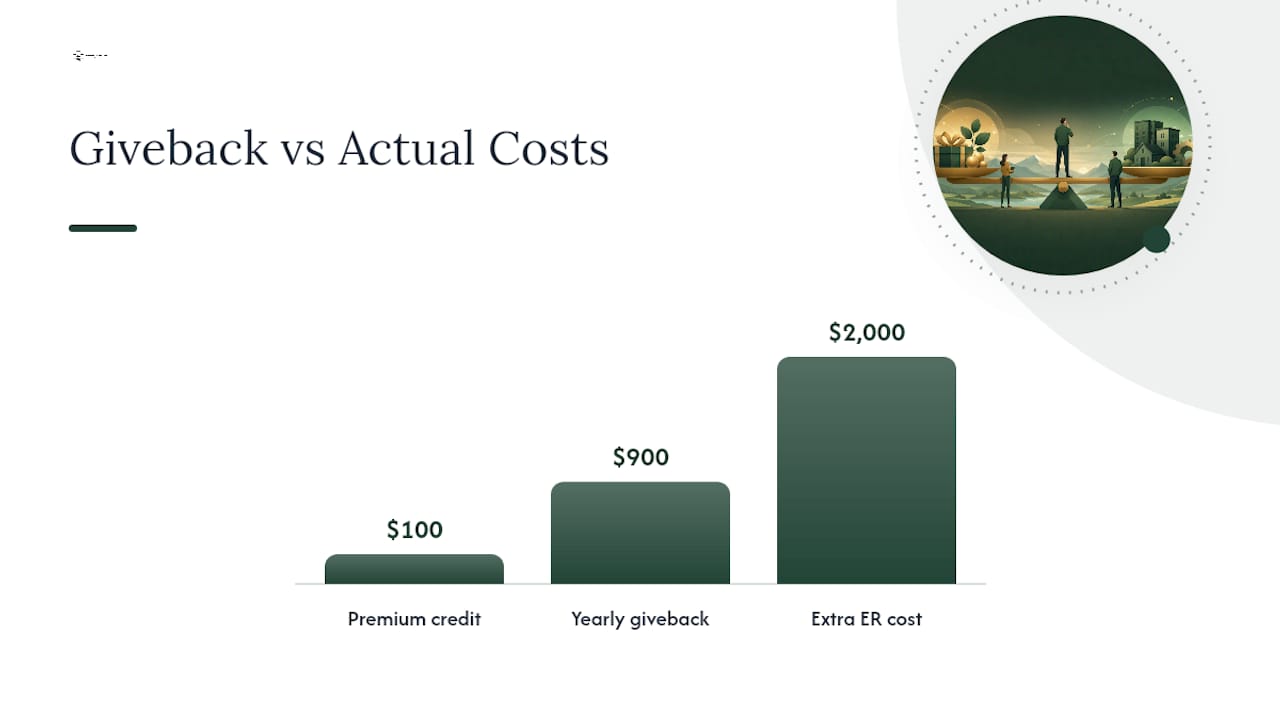
A bigger giveback isn’t automatically the better deal. The same PMC analysis found that plans offering Part B givebacks tended to carry higher enrollee cost-sharing and higher out-of-pocket maximums, and were disproportionately offered by newer, smaller-enrollment contracts. That pattern makes sense once you understand the funding mechanics: givebacks come out of a plan’s CMS rebate dollars, the same pool of money that could otherwise go toward lower copays or richer drug coverage. A plan that hands you $100 back on your premium has to fund that somewhere, and it’s often through the benefit design you’ll notice later at the pharmacy or the specialist’s office.
Before you sign up for the plan with the flashiest premium credit, run through these trade-offs:
- Compare the plan’s out-of-pocket maximum against your current plan or Original Medicare with Medigap.
- Check whether your existing doctors and specialists are in-network, since giveback plans sometimes run narrower networks.
- Review the drug formulary line by line if you take maintenance medications; Part D coverage varies plan to plan even within the same carrier.
- Estimate your expected annual medical use honestly. A healthy year favors the premium credit; a year with surgery or ongoing specialist care can erase it fast.
- Check the plan’s CMS star rating as a general quality signal.
Pro Tip: Add up your realistic annual medical costs, not just your premium, before comparing plans side by side. A $900 yearly giveback means nothing if a single ER visit costs you $2,000 more in cost-sharing than your current plan would.
How Do You Find Giveback Plans in Your County?
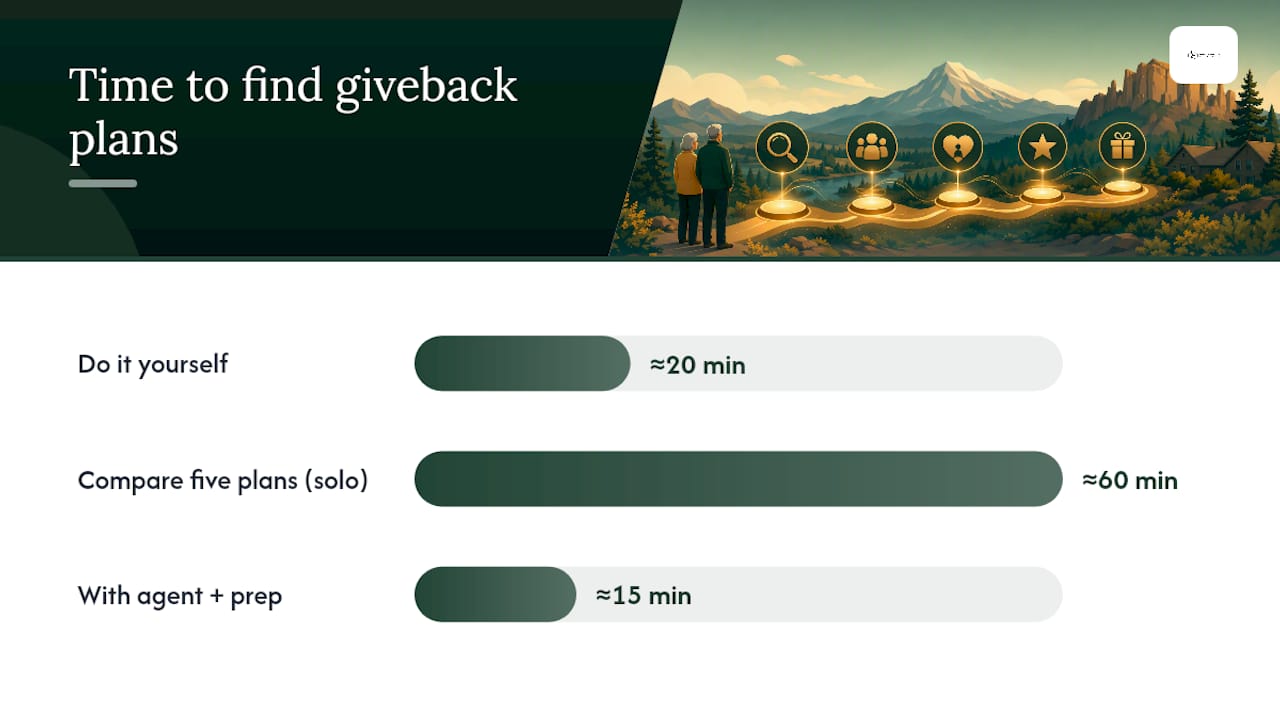
Finding out what’s actually available where you live takes about twenty minutes if you follow these steps in order.
- Run Medicare Plan Finder. Go to Medicare Plan Compare, enter your ZIP code, and filter results to Medicare Advantage plans. Giveback amounts are usually listed directly in the plan summary.
- Open the Summary of Benefits and Evidence of Coverage. These documents spell out the exact giveback amount and confirm how it’s applied, either through SSA deduction or a reduced invoice.
- Total your expected annual cost. Add the premium (after the giveback), estimated copays based on your typical usage, and your prescription costs under that plan’s formulary.
- Confirm your network and drug coverage. Check that your current providers and medications are covered before you commit.
- Note your enrollment window. Most people can only switch during the Annual Enrollment Period (October 15 to December 7) or a valid Special Enrollment Period, and the giveback typically takes effect the month your new coverage starts.
Reading plan documents solo can feel like translating a foreign language, especially when you’re trying to compare five plans with different formularies and cost-sharing tiers side by side. A licensed local agent at Mountaintop Insurance can pull every plan available in your Deschutes County ZIP code and walk through the actual math with you, free of charge, before you commit to anything.
Pro Tip: Pull your current prescription list and your doctors’ names before you call anyone. Having that ready cuts a plan comparison conversation from an hour down to fifteen minutes.
What If the Giveback Doesn’t Show Up on Time?
Give it at least one full billing cycle, sometimes two, before assuming something’s wrong. Retroactive credits are standard practice once your enrollment officially processes, so a delay isn’t automatically a red flag.
If it’s been longer than that, work through this troubleshooting list:
- Log in to your SSA My Account and check whether your benefit amount reflects the updated Part B deduction.
- Pull your plan’s Evidence of Coverage and confirm the giveback amount matches what you were quoted at enrollment.
- Call your plan’s member services line directly, since they administer the credit, not Medicare itself.
- Keep your enrollment confirmation and ANOC on hand for every call.
- If your plan can’t resolve it, escalate to CMS.
Have your Medicare ID number, your SSA account details, and your plan’s ANOC ready before you dial. Every representative will ask for those three things first.
A Local Agent’s Take on Part B Givebacks
Mountaintop Insurance has walked Central Oregon clients through Medicare decisions for years, and the giveback question comes up constantly, usually framed as “why wouldn’t I take the free money?” The honest answer is that it’s rarely free. During consultations, the agency runs the same total-cost comparison outlined above: expected usage, network fit, drug formulary, and out-of-pocket maximum, not just the premium credit on the brochure.
That’s the whole point of an education-first consultation instead of a sales pitch. Bend and Deschutes County residents get a clear picture of what a giveback plan actually costs them over a full year, not just what it saves them each month.
— Jesse Zimmerman
Get Local Help Comparing Part B Giveback Plans
Comparing Medicare Advantage plans by premium credit alone is how people end up with a smaller check every month than they expected once copays and specialist visits kick in. Mountaintop Insurance reviews every plan available in your Deschutes County ZIP code side by side, including giveback amounts, network fit, and drug formulary, so you see the real annual cost before you enroll, not after your first ER bill. This isn’t a call-center script reading you premium numbers off a screen. It’s a local conversation with someone who knows which Bend-area providers are in which networks.
If you’re weighing a Part B giveback plan or just trying to understand your Medicare options for 2026, schedule a free consultation with Mountaintop Insurance and get a straight answer on whether the giveback you’re looking at actually pencils out for your situation.
This article is general information, not a substitute for advice from a qualified financial advisor. Consult a qualified financial professional about your own circumstances before acting on anything here.
Sources
FAQ
Who qualifies for the Part B giveback benefit?
You qualify if you’re enrolled in Medicare Parts A and B, personally pay your own Part B premium, aren’t on a Medicare Savings Program or Medicaid that covers that premium, and enroll in a specific Medicare Advantage plan that offers the benefit in your county.
What is the Part B giveback amount for 2026?
Amounts vary by plan and county rather than following one fixed figure, but 2024 data showed a mean of $77 per month and a median of $75, with a cap equal to the full standard Part B premium of $202.90.
Is the Part B giveback legit?
Yes. It’s a real, optional benefit that private Medicare Advantage carriers can offer as part of their CMS-approved plan design, confirmed through official Medicare Plan Compare listings, not a scam or a government handout.
How do I get close to $800 back from Medicare Part B in a year?
Some plans offer premium credits in a typical range that varies by county; check Medicare Plan Compare for your ZIP code or ask a licensed agent to confirm which local plans offer a giveback amount.
Does Medigap offer a Part B giveback?
No. Medigap plans supplement Original Medicare and never include a Part B giveback, since the benefit only exists within Medicare Advantage plan designs.
Recommended
Disclaimer: This article is for general educational purposes only and does not constitute personalized advice. Medicare rules and plan details change frequently.
Discuss Your Situation With Us